


As a supplier of Single - Ended Beam Load Cells, I often encounter questions from customers about the suitability of these load cells in harsh environments. In this blog post, I will delve into this topic, exploring the capabilities and limitations of Single - Ended Beam Load Cells when faced with challenging conditions.
Understanding Single - Ended Beam Load Cells
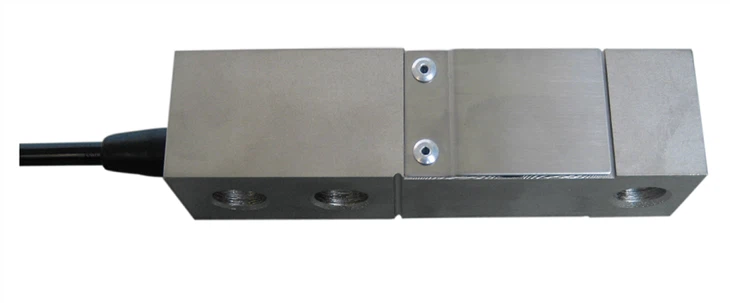
Before we discuss their performance in harsh environments, let's first understand what Single - Ended Beam Load Cells are. A Single - Ended Beam Load Cell is a type of force - measuring device. It operates based on the principle of strain gauges. When a load is applied to the beam, it deforms slightly. The strain gauges attached to the beam change their electrical resistance in proportion to the deformation, which can then be converted into an electrical signal representing the applied load.
These load cells are known for their simplicity, compact size, and relatively high accuracy. They are commonly used in a wide range of applications, such as industrial weighing systems, material testing machines, and automation equipment.
Harsh Environments Defined
Harsh environments can take many forms. They may include extreme temperatures, high humidity, corrosive chemicals, excessive dust, vibration, and shock. Each of these factors can potentially affect the performance and longevity of a load cell.
Extreme Temperatures
Temperature changes can cause the materials in a load cell to expand or contract. This thermal expansion or contraction can lead to changes in the dimensions of the beam and the strain gauges, resulting in measurement errors. High temperatures can also accelerate the aging process of the materials and electronics inside the load cell, reducing its lifespan.
High Humidity and Corrosive Chemicals
Moisture can penetrate the protective coatings of a load cell and cause corrosion of the metal components, especially the strain gauges and the electrical connections. Corrosive chemicals, such as acids or alkalis, can have an even more severe impact, rapidly deteriorating the load cell's structure and functionality.
Excessive Dust
Dust particles can accumulate on the surface of the load cell and inside its mechanical components. This can interfere with the movement of the beam and cause friction, leading to inaccurate measurements. In some cases, dust can also clog the ventilation holes of the load cell, affecting its heat dissipation and potentially causing overheating.
Vibration and Shock
Vibration and shock can cause mechanical stress on the load cell. Repeated vibrations can loosen the connections between the strain gauges and the beam, or even damage the strain gauges themselves. A sudden shock can cause the load cell to deform beyond its elastic limit, permanently affecting its accuracy.
Single - Ended Beam Load Cells in Harsh Environments
Resistance to Extreme Temperatures
Many modern Single - Ended Beam Load Cells are designed to withstand a certain range of temperatures. Some models are equipped with temperature compensation circuits that can minimize the effects of temperature changes on the measurement. For example, by using materials with low thermal expansion coefficients for the beam and strain gauges, and by carefully calibrating the load cell at different temperatures, it is possible to achieve stable performance over a relatively wide temperature range. However, extremely high or low temperatures can still pose a challenge. In such cases, additional measures may be required, such as installing the load cell in a temperature - controlled enclosure.
Protection against Humidity and Corrosion
To protect against humidity and corrosion, Single - Ended Beam Load Cells can be coated with protective materials. For instance, a stainless - steel housing can provide excellent resistance to moisture and many corrosive substances. Some load cells also have special seals to prevent water and chemicals from entering the internal components. Additionally, using hermetically sealed strain gauges can further enhance the load cell's resistance to harsh chemical environments.
Handling Excessive Dust
To deal with excessive dust, load cells can be designed with dust - proof enclosures. These enclosures can prevent dust from entering the load cell and interfering with its operation. Some load cells also have smooth surfaces that make it difficult for dust to adhere, and they can be easily cleaned if necessary.
Withstanding Vibration and Shock
Single - Ended Beam Load Cells can be engineered to be more resistant to vibration and shock. This can be achieved through proper mechanical design, such as using shock - absorbing materials or mounting the load cell in a way that minimizes the transfer of vibrations. Additionally, some load cells are equipped with over - load protection mechanisms to prevent damage from sudden shocks.
Comparison with Other Types of Load Cells
It's also useful to compare Single - Ended Beam Load Cells with other types of load cells in the context of harsh environments.
S - Beam Load Cell
The S - Beam Load Cell is another popular type of load cell. It has a different shape and mechanical structure compared to the Single - Ended Beam Load Cell. S - Beam Load Cells are generally more suitable for applications where the load is applied at an angle or where there are significant side loads. In terms of harsh environments, S - Beam Load Cells can also be designed with similar protective features as Single - Ended Beam Load Cells, but their different shape may make them more or less susceptible to certain environmental factors. For example, the S - shape may provide more surface area for dust accumulation in some cases.
Bellow Beam Load Cell
The Bellow Beam Load Cell has a unique bellow - shaped structure. This design allows it to accommodate more complex loadings and can provide better protection against side loads. In harsh environments, bellow beam load cells can be very effective in withstanding vibration and shock due to their flexible structure. However, the bellow structure may be more vulnerable to damage from sharp objects or high - pressure chemicals.

Conclusion
In conclusion, Single - Ended Beam Load Cells can be used in harsh environments, but it depends on the specific nature and severity of the environment. With proper design and protective measures, they can provide reliable and accurate measurements even under challenging conditions. However, it is crucial to carefully assess the environmental factors and choose the appropriate load cell model and protection features.
If you are looking for a Single - Ended Beam Load Cell for your application in a harsh environment, we are here to help. Our team of experts can provide you with detailed information and guidance on selecting the right load cell for your needs. Whether you need a load cell with high - temperature resistance, corrosion protection, or vibration - damping capabilities, we have the solutions. Contact us to start a conversation about your requirements and explore how our Single - Ended Beam Load Cells can meet your needs.
References
- "Load Cell Handbook" by HBM Test and Measurement
- "Industrial Weighing Technology" by METTLER TOLEDO
- Various technical documents from load cell manufacturers


