


As a supplier of Single Point Load Cells, I often encounter a common question from customers: Can a single point load cell be used for both tension and compression? This is a crucial inquiry, especially for those in industries where load measurement in different force directions is required. In this blog post, I'll delve into the technical aspects, applications, and limitations to provide a comprehensive answer.
Understanding Single Point Load Cells
Single point load cells are a type of force sensor designed to measure loads applied at a single point. They are commonly used in weighing scales, such as retail scales, bench scales, and platform scales. These load cells are known for their simplicity, accuracy, and cost - effectiveness. Their design typically consists of a single piece of metal with strain gauges attached to it. When a load is applied, the metal deforms, and the strain gauges detect this deformation, converting it into an electrical signal proportional to the applied force.
The basic principle of operation is based on the piezoresistive effect. Strain gauges, which are made of materials whose electrical resistance changes with mechanical strain, are bonded to the load cell body. As the load cell deforms under the applied load, the strain gauges experience a change in resistance. This change is then measured and processed by a signal conditioning circuit to provide an output that represents the magnitude of the load.
Capability for Tension and Compression
The short answer to whether a single point load cell can be used for both tension and compression is: it depends. Some single point load cells are engineered to measure both tension and compression forces. These load cells are designed with a symmetrical structure and strain gauge arrangement that allows them to accurately detect forces in both directions.
When a load cell is designed for bidirectional measurement, the strain gauges are placed in such a way that they can sense the deformation caused by both pulling (tension) and pushing (compression) forces. For example, a well - designed single point load cell may have strain gauges arranged in a Wheatstone bridge configuration. This configuration is sensitive to changes in resistance caused by both positive and negative strains, enabling the load cell to measure forces in opposite directions.
However, not all single point load cells are suitable for bidirectional measurement. Some are specifically designed for compression - only or tension - only applications. Compression - only load cells are optimized to measure forces that push down on the load cell, and their design may not be able to accurately detect or withstand tension forces. Similarly, tension - only load cells are built to measure pulling forces and may not function correctly under compression.
Applications in Tension and Compression
In industries where both tension and compression forces need to be measured, single point load cells with bidirectional capabilities can be extremely useful. For instance, in the packaging industry, a single point load cell can be used to measure the weight of a product during the filling process (compression) and also to measure the force required to lift or move the packaged item (tension).
In the food processing industry, these load cells can be used in conveyor systems. They can measure the weight of food products as they are placed on the conveyor (compression) and also detect any pulling forces that may occur during the movement of the conveyor belts or when products are being transferred between different stages of the production line (tension).
Another example is in the automotive industry, where single point load cells can be used in testing fixtures. They can measure the compression forces exerted by components during assembly and also the tension forces when parts are being pulled apart for quality control or research purposes.
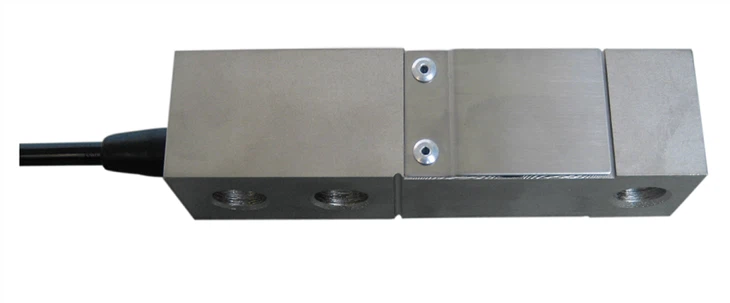

Advantages of Using a Single Point Load Cell for Both Tension and Compression
Using a single point load cell for both tension and compression offers several advantages. Firstly, it reduces the need for multiple load cells. Instead of having separate load cells for tension and compression measurements, a single bidirectional load cell can be used, which simplifies the system design and reduces costs.
Secondly, it improves accuracy. Since the same load cell is used for both types of measurements, there is less variability in the measurement process. This is because the calibration and performance characteristics of a single load cell are more consistent compared to using two different load cells.
Thirdly, it saves space. In applications where space is limited, a single bidirectional load cell takes up less room than two separate load cells, allowing for more compact and efficient system designs.
Limitations and Considerations
Despite the advantages, there are also some limitations and considerations when using a single point load cell for both tension and compression. One of the main limitations is the range of forces that the load cell can handle. Bidirectional load cells may have a reduced capacity compared to load cells designed for a single direction. This is because the design needs to balance the requirements for measuring both tension and compression forces, which can limit the maximum load that the load cell can withstand.
Another consideration is the accuracy at the extremes of the measurement range. In some cases, the accuracy of a bidirectional single point load cell may decrease when measuring near the maximum tension or compression limits. This is due to the non - linear behavior of the load cell and the strain gauges at high loads.
It's also important to note that the installation and mounting of the load cell can affect its performance. Incorrect installation can introduce additional stresses or misalignments, which can lead to inaccurate measurements, especially when measuring forces in different directions.
Comparison with Other Types of Load Cells
When considering using a single point load cell for both tension and compression, it's useful to compare it with other types of load cells, such as Single-Ended Beam Load Cell and S-Beam Load Cell.
Single - ended beam load cells are known for their high accuracy and are often used in industrial weighing applications. They can be designed for both tension and compression measurements, but their structure is more complex than that of single point load cells. This complexity can make them more expensive and less suitable for applications where space is limited.
S - beam load cells are also capable of measuring both tension and compression forces. They are commonly used in applications where the load is applied at an angle or in a non - vertical direction. However, they are generally larger and heavier than single point load cells, which may not be ideal for applications with size and weight constraints.
Conclusion
In conclusion, a single point load cell can be used for both tension and compression, but it depends on the specific design and capabilities of the load cell. Bidirectional single point load cells offer several advantages, including cost savings, improved accuracy, and space efficiency. However, they also have limitations, such as reduced capacity and potential accuracy issues at the extremes of the measurement range.
If you are in need of a load cell for applications that require both tension and compression measurements, it's important to carefully evaluate your requirements. Consider factors such as the range of forces, accuracy requirements, space limitations, and budget. As a Single Point Load Cell supplier, I am here to assist you in choosing the right load cell for your specific needs. Whether you have questions about product specifications, installation, or calibration, feel free to reach out to me for more information and to discuss potential purchasing options.
References
- Ono, K., & Takeda, N. (2000). Strain Gauge Technology and Its Applications. Springer.
- Doebelin, E. O. (2003). Measurement Systems: Application and Design. McGraw - Hill.
- Transducer Techniques. (2019). Load Cell Handbook. Transducer Techniques.

