


As a supplier of Electromagnetic Flow Meters, I often encounter inquiries regarding the capabilities and limitations of these devices. One of the most frequently asked questions is whether an electromagnetic flow meter can measure the flow of conductive liquids only. In this blog post, I will delve into this topic, exploring the principles behind electromagnetic flow meters, their applications, and the extent to which they can be used with different types of liquids.
How Electromagnetic Flow Meters Work
Electromagnetic flow meters, also known as magmeters, operate based on Faraday's law of electromagnetic induction. This law states that when a conductor moves through a magnetic field, an electromotive force (EMF) is induced perpendicular to both the direction of the magnetic field and the direction of the conductor's movement. In the context of a flow meter, the conductive liquid acts as the conductor, and the magnetic field is generated by the flow meter's coils.
As the conductive liquid flows through the pipe, it cuts across the magnetic field, inducing an EMF that is proportional to the velocity of the liquid. The electrodes installed in the flow meter detect this EMF, and the flow meter's electronics convert it into a flow rate measurement. The relationship between the induced EMF and the flow rate is linear, making electromagnetic flow meters highly accurate and reliable for measuring the flow of conductive liquids.
Conductivity Requirements
The key requirement for an electromagnetic flow meter to function properly is that the liquid being measured must be conductive. This is because the flow meter relies on the movement of charged particles (ions) in the liquid to induce the EMF. The minimum conductivity required for accurate measurement varies depending on the design of the flow meter, but it is typically in the range of a few microsiemens per centimeter (μS/cm).
For most industrial applications, water-based solutions, acids, alkalis, and slurries are conductive enough to be measured by electromagnetic flow meters. However, some liquids, such as pure water, hydrocarbons, and non-aqueous solvents, have very low conductivity and cannot be measured using this type of flow meter. In these cases, alternative flow measurement technologies, such as ultrasonic flow meters or Coriolis flow meters, may be more suitable.
Measuring Non-Conductive Liquids
While electromagnetic flow meters are primarily designed for measuring the flow of conductive liquids, there are some cases where they can be used to measure non-conductive liquids indirectly. One approach is to add a conductive tracer to the non-conductive liquid. The tracer can be a salt solution or a chemical additive that increases the conductivity of the liquid to a level that can be detected by the flow meter.
Another method is to use a hybrid flow meter that combines the principles of electromagnetic and ultrasonic flow measurement. These flow meters can measure the flow of both conductive and non-conductive liquids by using different measurement techniques depending on the properties of the liquid. However, these hybrid flow meters are more complex and expensive than traditional electromagnetic flow meters, and they may not be suitable for all applications.
Applications of Electromagnetic Flow Meters
Electromagnetic flow meters are widely used in a variety of industries, including water and wastewater treatment, chemical processing, food and beverage, pharmaceutical, and mining. In the water and wastewater treatment industry, electromagnetic flow meters are used to measure the flow of raw water, treated water, and wastewater in pipes and channels. They are also used to monitor the flow of chemicals and additives in the treatment process.
In the chemical processing industry, electromagnetic flow meters are used to measure the flow of corrosive and abrasive liquids, such as acids, alkalis, and slurries. They are also used to monitor the flow of reactants and products in chemical reactors and pipelines. In the food and beverage industry, electromagnetic flow meters are used to measure the flow of liquids, such as milk, juice, and beer, in processing and packaging lines. They are also used to monitor the flow of cleaning solutions and sanitizers in the production facility.
In the pharmaceutical industry, electromagnetic flow meters are used to measure the flow of liquids, such as drugs, vaccines, and solvents, in manufacturing and filling processes. They are also used to monitor the flow of water and other fluids in the purification and sterilization processes. In the mining industry, electromagnetic flow meters are used to measure the flow of slurries, such as coal, copper, and gold, in pipelines and processing plants. They are also used to monitor the flow of water and other fluids in the mining operations.
Advantages of Electromagnetic Flow Meters
One of the main advantages of electromagnetic flow meters is their high accuracy and reliability. They can measure the flow of conductive liquids with an accuracy of up to ±0.5% of the measured value, making them suitable for a wide range of applications. They are also insensitive to changes in fluid density, viscosity, temperature, and pressure, which makes them ideal for measuring the flow of liquids in challenging environments.
Another advantage of electromagnetic flow meters is their non-invasive design. They do not have any moving parts or obstructions in the flow path, which reduces the risk of clogging and wear. This makes them suitable for measuring the flow of abrasive and corrosive liquids, as well as slurries and solids-laden liquids. They also have a low pressure drop, which reduces the energy consumption of the system.
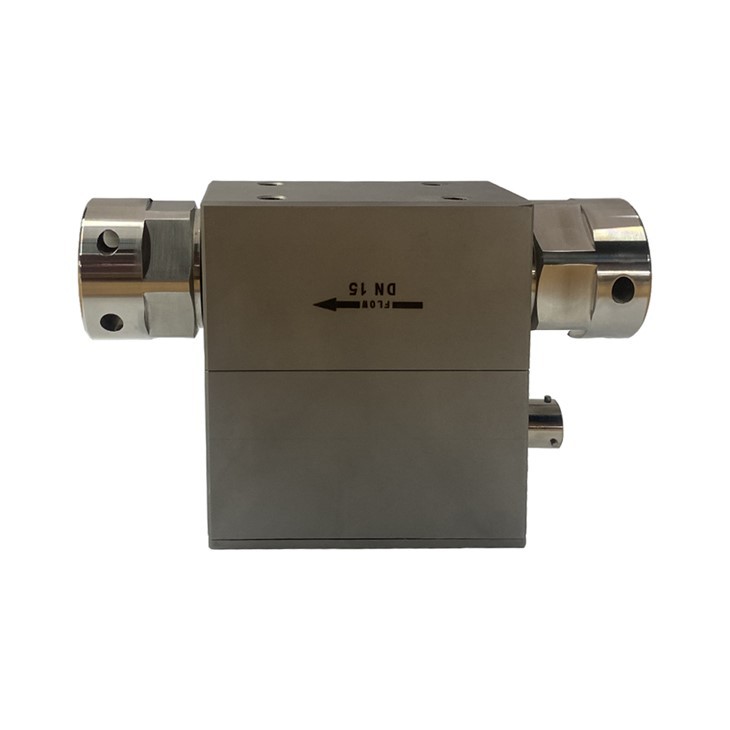

Electromagnetic flow meters are also easy to install and maintain. They can be installed in any orientation, and they do not require any special calibration or adjustment. They also have a long service life, which reduces the overall cost of ownership.
Conclusion
In conclusion, electromagnetic flow meters are primarily designed for measuring the flow of conductive liquids. They operate based on Faraday's law of electromagnetic induction, and they require the liquid being measured to have a minimum conductivity of a few microsiemens per centimeter. While they cannot measure the flow of non-conductive liquids directly, there are some cases where they can be used to measure non-conductive liquids indirectly by adding a conductive tracer or using a hybrid flow meter.
Electromagnetic flow meters are widely used in a variety of industries, including water and wastewater treatment, chemical processing, food and beverage, pharmaceutical, and mining. They offer high accuracy, reliability, and non-invasive measurement, making them suitable for a wide range of applications. If you are looking for a reliable and accurate flow measurement solution for your conductive liquid applications, an electromagnetic flow meter may be the right choice for you.
If you are interested in learning more about our Electromagnetic Flow Meter products or have any questions about flow measurement, please do not hesitate to contact us. Our team of experts is always available to assist you with your flow measurement needs. We also offer a range of Intrinsically Safe Flowmeter options for hazardous environments. Contact us today to discuss your specific requirements and explore how our flow meters can benefit your operations.
References
- ISO 9104:1991, Measurement of fluid flow in closed conduits - Electromagnetic flowmeters.
- OMEGA Engineering, Inc. (2023). Electromagnetic Flow Meters. Retrieved from https://www.omega.com/en-us/resources/electromagnetic-flow-meters
- Yokogawa Electric Corporation. (2023). Electromagnetic Flowmeters. Retrieved from https://www.yokogawa.com/us/products/measurement-controls-and-instruments/flowmeters/electromagnetic-flowmeters/

