


Hey there! As a supplier of S - Beam Load Cells, I often get asked this burning question: Can S - Beam Load Cells measure dynamic loads? Well, let's dive right into it and find out.

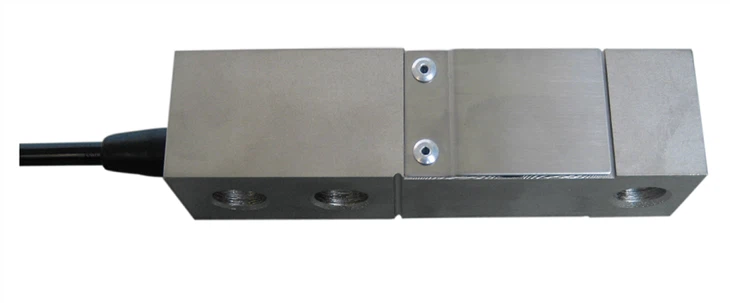
First off, let's understand what S - Beam Load Cells are and what dynamic loads mean. S - Beam Load Cells are a popular type of load cell in the weighing and force - measuring industry. They're shaped like the letter "S", which gives them their unique name. These load cells work on the principle of strain gauges. When a force is applied to the S - Beam Load Cell, it causes a deformation in the beam, and the strain gauges attached to the beam measure this deformation and convert it into an electrical signal.
Now, dynamic loads are forces that change over time. Unlike static loads, which remain constant, dynamic loads can vary in magnitude, direction, and frequency. Examples of dynamic loads include the forces exerted by moving machinery, vehicles in motion, or even the impact forces during a collision.
The ability of S - Beam Load Cells to measure dynamic loads depends on several factors. One of the key factors is the natural frequency of the load cell. The natural frequency is the frequency at which the load cell will vibrate when excited. If the frequency of the dynamic load is close to the natural frequency of the load cell, resonance can occur. Resonance is a phenomenon where the amplitude of vibration increases significantly, which can lead to inaccurate measurements and even damage to the load cell.
Most S - Beam Load Cells have a relatively high natural frequency, which means they can handle dynamic loads with relatively high frequencies. However, it's important to note that the higher the frequency of the dynamic load, the more challenging it becomes for the load cell to accurately measure it. For example, if you're trying to measure the impact forces during a high - speed collision, the load cell needs to be able to respond quickly enough to capture the rapid changes in force.
Another factor that affects the ability of S - Beam Load Cells to measure dynamic loads is the damping ratio. The damping ratio determines how quickly the load cell returns to its equilibrium position after being subjected to a force. A higher damping ratio means that the load cell will settle down more quickly, reducing the effects of vibration and improving the accuracy of the measurement.
In many applications, S - Beam Load Cells can indeed measure dynamic loads quite effectively. For instance, in industrial automation, they can be used to measure the forces exerted by robotic arms during pick - and - place operations. These operations often involve dynamic forces as the robot moves quickly and precisely. S - Beam Load Cells can provide real - time feedback on these forces, allowing for better control and adjustment of the robotic system.
In the automotive industry, S - Beam Load Cells can be used to measure the forces on suspension systems. As the vehicle moves over different terrains, the suspension system experiences dynamic loads. By measuring these loads, engineers can design better - performing suspension systems that provide a smoother ride and improved handling.
However, there are limitations. If the dynamic load has a very high frequency or a very large amplitude, S - Beam Load Cells may not be the best choice. In such cases, other types of load cells might be more suitable. For example, Single Point Load Cell are often used in applications where the load is centered, and they can offer good performance for certain dynamic load scenarios. Single-Ended Beam Load Cell are also an option, especially when dealing with one - sided loading. And Bellow Beam Load Cell can be used in applications where there are lateral forces and dynamic stresses.
When considering using S - Beam Load Cells for dynamic load measurements, it's crucial to do some testing. You need to understand the characteristics of your specific dynamic load, such as its frequency range, amplitude, and duration. By conducting tests, you can determine if the S - Beam Load Cell can provide accurate and reliable measurements in your application.
Another important aspect is the installation of the S - Beam Load Cell. Proper installation is essential for accurate dynamic load measurements. The load cell needs to be mounted securely to prevent any movement or vibration that could affect the measurement. Make sure to follow the manufacturer's guidelines for installation, including the use of the correct mounting hardware and the proper alignment of the load cell.
In addition, calibration is key. Calibration ensures that the load cell is providing accurate measurements. For dynamic load measurements, it's recommended to calibrate the load cell under similar dynamic conditions as the actual application. This way, you can account for any effects of the dynamic load on the load cell's performance.
If you're still not sure whether S - Beam Load Cells are the right choice for your dynamic load measurement needs, don't worry. We're here to help! As a supplier of S - Beam Load Cells, we have a team of experts who can provide you with more in - depth information and guidance. We can help you select the right load cell for your specific application, and we can also offer support in installation, calibration, and troubleshooting.
If you're interested in purchasing S - Beam Load Cells or have any questions about dynamic load measurements, feel free to reach out. We're always happy to have a chat and discuss how we can meet your requirements. Whether you're in the industrial, automotive, or any other industry that requires accurate force measurement, we've got you covered.
So, to sum it up, S - Beam Load Cells can measure dynamic loads in many cases, but it depends on various factors such as the natural frequency, damping ratio, and the characteristics of the dynamic load itself. With proper testing, installation, and calibration, they can provide reliable and accurate measurements. But if you're facing a challenging dynamic load scenario, we can help you explore other load cell options as well.
References:
- "Load Cell Handbook" - A comprehensive guide on load cells and their applications.
- Industry research papers on dynamic force measurement and load cell technology.


