


Hey there! As a supplier of S - Beam Load Cells, I often get asked about how accurate these little devices really are. In this blog, I'm gonna break down the factors that affect the accuracy of S - Beam Load Cells and give you a clear picture of what to expect.
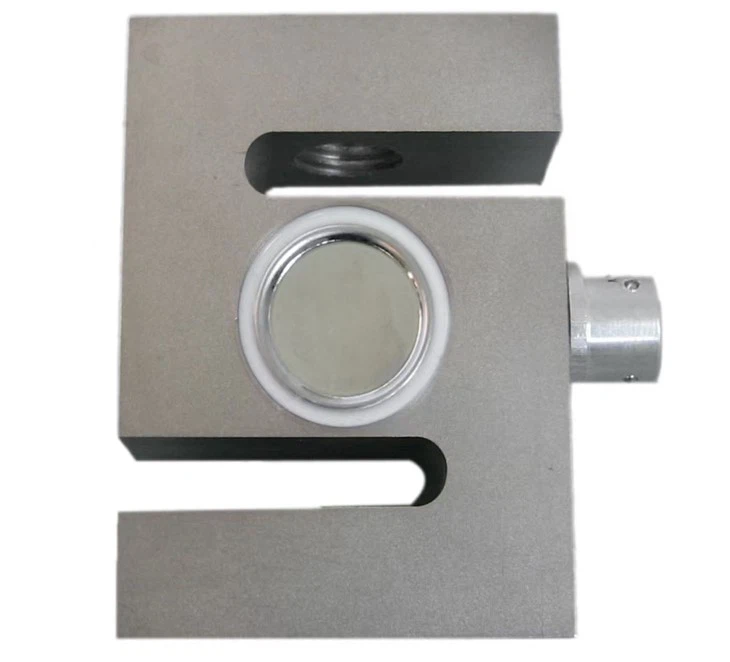
First off, let's understand what an S - Beam Load Cell is. It's a type of force transducer that converts force into an electrical signal. The "S" shape gives it some unique properties that make it suitable for a wide range of applications, from industrial weighing systems to testing equipment. You can check out more about S - Beam Load Cell on our website.
Factors Affecting Accuracy
1. Material and Construction
The material used to make the load cell plays a huge role in its accuracy. Most S - Beam Load Cells are made from high - quality alloy steel or aluminum. Alloy steel is known for its high strength and good fatigue resistance, which means it can withstand repeated loading without losing its accuracy. Aluminum, on the other hand, is lighter and can be a good choice for applications where weight is a concern.
The construction process also matters. Precision machining is crucial to ensure that the load cell has the right dimensions and a uniform structure. Any imperfections in the manufacturing process can lead to errors in the measurement. For example, if the strain gauges (the components that actually measure the force) are not properly bonded to the load cell body, it can cause inaccurate readings.
2. Strain Gauge Technology
Strain gauges are the heart of a load cell. They work by changing their electrical resistance when they are deformed under load. The accuracy of the strain gauges themselves, as well as how they are arranged on the load cell, can have a big impact on the overall accuracy of the S - Beam Load Cell.
Modern strain gauges are highly precise, but there are still some factors that can affect their performance. Temperature changes, for instance, can cause the resistance of the strain gauges to change, leading to measurement errors. To compensate for this, many load cells are equipped with temperature compensation circuits. These circuits adjust the output of the load cell to account for temperature variations, improving the accuracy over a wide temperature range.
3. Calibration
Calibration is the process of comparing the output of a load cell to a known standard. It's essential for ensuring the accuracy of the load cell. A well - calibrated load cell will give accurate readings within a specified range of loads.
However, calibration is not a one - time thing. Over time, the performance of the load cell can change due to factors like wear and tear, environmental conditions, and mechanical stress. That's why regular calibration is necessary to maintain the accuracy of the load cell. Depending on the application, calibration may need to be done annually, semi - annually, or even more frequently.
4. Environmental Conditions
The environment in which the load cell operates can also affect its accuracy. Factors such as humidity, vibration, and electromagnetic interference (EMI) can all cause problems.

High humidity can cause corrosion of the load cell components, which can lead to changes in the electrical properties of the strain gauges and inaccurate readings. Vibration can cause the load cell to oscillate, making it difficult to get a stable measurement. EMI can interfere with the electrical signals from the load cell, leading to noise and errors in the output.
To minimize the effects of these environmental factors, load cells can be designed with appropriate protection. For example, they can be coated with a protective layer to prevent corrosion, or they can be equipped with shock - absorbing mounts to reduce the impact of vibration.
Typical Accuracy Ratings
S - Beam Load Cells typically have accuracy ratings expressed as a percentage of the full - scale output (FSO). Common accuracy ratings range from 0.03% to 0.1% FSO. This means that for a load cell with a full - scale capacity of 1000 kg and an accuracy rating of 0.05% FSO, the maximum error in the measurement would be 0.5 kg (0.05% of 1000 kg).
It's important to note that these accuracy ratings are based on ideal conditions. In real - world applications, the actual accuracy may be affected by the factors we discussed earlier, such as environmental conditions and calibration.
Comparing with Other Types of Load Cells
Let's briefly compare S - Beam Load Cells with other types of load cells, like Single - Ended Beam Load Cell and Bellow Beam Load Cell.
Single - Ended Beam Load Cells are similar to S - Beam Load Cells in some ways, but they have a different shape and are often used in applications where the load is applied at one end. They can offer good accuracy, but their design may make them more susceptible to side loads, which can affect the accuracy.
Bellow Beam Load Cells, on the other hand, are designed to be more resistant to side loads and can be a good choice for applications where the load is not perfectly aligned. However, they may have a lower accuracy compared to S - Beam Load Cells in some cases.
Conclusion
So, how accurate are S - Beam Load Cells? Well, they can be very accurate, especially when they are made from high - quality materials, use advanced strain gauge technology, are properly calibrated, and are used in a suitable environment. But it's important to remember that achieving and maintaining high accuracy requires careful consideration of all the factors involved.
If you're in the market for S - Beam Load Cells and want to ensure that you get the most accurate and reliable products, don't hesitate to reach out. We're here to help you choose the right load cells for your specific application and answer any questions you may have. Whether it's for a small - scale weighing project or a large - scale industrial application, we've got the expertise and the products to meet your needs.
References
- O'Connor, T. (2018). Load Cell Handbook. Industrial Measurement Press.
- Smith, J. (2020). Strain Gauge Technology and Applications. Sensor Science Journal.

