


Flow meters are essential devices used across various industries to measure the flow rate of liquids, gases, or steam. As a reputable flow meter supplier, I've witnessed firsthand the critical role these instruments play in countless applications, from ensuring accurate chemical dosing in manufacturing processes to monitoring water consumption in municipal utilities. In this blog post, I'll delve into the inner workings of flow meters, exploring the different types available and how they operate.
Understanding Flow Measurement
Before we dive into the specifics of how flow meters work, it's important to understand the concept of flow measurement itself. Flow rate refers to the volume or mass of a fluid that passes through a given point in a specified period. This measurement is crucial for controlling processes, optimizing efficiency, and ensuring compliance with regulatory standards.
There are two primary types of flow measurement: volumetric and mass flow. Volumetric flow meters measure the volume of fluid passing through a pipe or channel, typically expressed in units such as liters per minute (L/min) or cubic meters per hour (m³/h). Mass flow meters, on the other hand, measure the mass of the fluid, which is independent of temperature and pressure variations. Mass flow is often expressed in units such as kilograms per second (kg/s) or pounds per hour (lb/h).
Types of Flow Meters
There are several types of flow meters available, each based on different operating principles and suited for specific applications. Here are some of the most common types:
1. Differential Pressure Flow Meters
Differential pressure (DP) flow meters are among the oldest and most widely used types of flow meters. They operate based on the principle that the pressure drop across a constriction in a pipe is proportional to the square of the flow rate. The most common type of DP flow meter is the orifice plate, which consists of a thin plate with a hole in the center installed in the pipe. As the fluid passes through the orifice, the velocity increases, causing a decrease in pressure. By measuring the pressure difference across the orifice, the flow rate can be calculated using Bernoulli's equation.
Other types of DP flow meters include venturi tubes, flow nozzles, and pitot tubes. These devices work on the same principle as the orifice plate but offer different advantages in terms of accuracy, rangeability, and pressure loss.
2. Positive Displacement Flow Meters
Positive displacement (PD) flow meters measure the flow rate by trapping a fixed volume of fluid and counting the number of times it is displaced. These meters are highly accurate and suitable for measuring viscous fluids, such as oil and honey, as well as low-flow applications.
There are several types of PD flow meters, including piston meters, oval gear meters, and nutating disc meters. Each type operates on a similar principle, using mechanical components to trap and measure the fluid volume.
3. Turbine Flow Meters
Turbine flow meters consist of a rotor with blades that rotate as the fluid passes through the meter. The rotational speed of the rotor is proportional to the flow rate, and this speed is typically measured using a magnetic pickup or an optical sensor. Turbine flow meters are known for their high accuracy, wide rangeability, and fast response time. They are commonly used in applications such as fuel metering, water treatment, and chemical processing.
4. Electromagnetic Flow Meters
Electromagnetic Flow Meter operate based on Faraday's law of electromagnetic induction. These meters consist of a pipe lined with an insulating material and two electrodes installed on opposite sides of the pipe. A magnetic field is applied perpendicular to the flow direction, and as the conductive fluid passes through the magnetic field, an electromotive force (EMF) is induced. The magnitude of the EMF is proportional to the flow rate, and it is measured by the electrodes.
Electromagnetic flow meters are highly accurate, have no moving parts, and can measure both forward and reverse flow. They are commonly used in applications where the fluid is conductive, such as water, wastewater, and slurries.
5. Ultrasonic Flow Meters
Ultrasonic flow meters use ultrasonic waves to measure the flow rate of a fluid. There are two main types of ultrasonic flow meters: transit-time and Doppler.
Transit-time ultrasonic flow meters measure the time it takes for an ultrasonic signal to travel upstream and downstream in the fluid. The difference in transit time is proportional to the flow rate. These meters are highly accurate and can be used to measure both clean and dirty fluids.
Doppler ultrasonic flow meters, on the other hand, measure the frequency shift of an ultrasonic signal reflected off particles or bubbles in the fluid. The frequency shift is proportional to the flow rate. Doppler flow meters are suitable for measuring fluids with suspended particles or bubbles, such as wastewater and slurries.

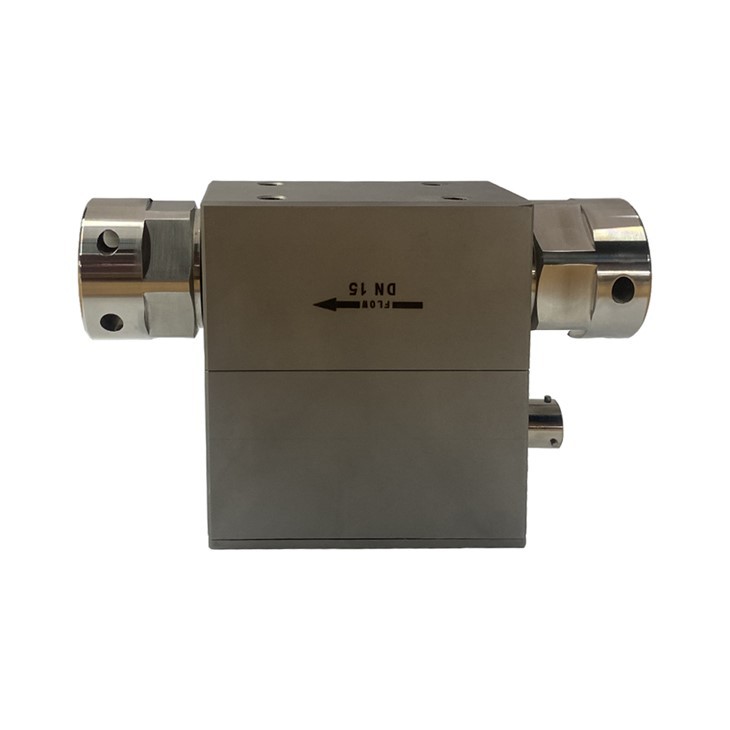
6. Vortex Flow Meters
Vortex flow meters operate based on the principle of the von Kármán vortex street. When a fluid flows past a bluff body, such as a cylinder or a shedder bar, vortices are shed alternately on either side of the body. The frequency of the vortex shedding is proportional to the flow rate, and this frequency is measured using a pressure sensor or a piezoelectric sensor.
Vortex flow meters are known for their high accuracy, wide rangeability, and low maintenance requirements. They are commonly used in applications such as steam measurement, gas flow measurement, and liquid flow measurement.
7. Intrinsically Safe Flowmeter
Intrinsically safe flowmeters are designed for use in hazardous environments where there is a risk of explosion or fire. These meters are constructed to prevent the release of sufficient energy to ignite the surrounding atmosphere. They typically use low-power electronic components and are certified to meet specific safety standards.
How Flow Meters Work
The operation of a flow meter depends on its type and the principle on which it is based. However, the general process of measuring flow can be broken down into the following steps:
1. Sensing the Flow
The first step in measuring flow is to sense the presence and characteristics of the fluid. This is typically done using a sensor or a transducer, which converts the physical properties of the fluid, such as pressure, velocity, or temperature, into an electrical signal.
2. Signal Processing
Once the flow signal is sensed, it is processed by the flow meter's electronics to convert it into a usable form. This may involve amplifying the signal, filtering out noise, and performing mathematical calculations to determine the flow rate.
3. Display and Output
The processed flow signal is then displayed on the flow meter's display panel or transmitted to a remote monitoring system. The flow meter may also provide additional outputs, such as analog signals (e.g., 4-20 mA) or digital signals (e.g., Modbus), for integration with other control systems.
4. Calibration and Verification
To ensure accurate and reliable flow measurement, flow meters need to be calibrated regularly. Calibration involves comparing the output of the flow meter to a known standard and adjusting the meter's settings as necessary. Verification is the process of checking the accuracy of the flow meter under normal operating conditions.
Choosing the Right Flow Meter
Selecting the right flow meter for a particular application is crucial to ensure accurate and reliable flow measurement. Here are some factors to consider when choosing a flow meter:
- Fluid Properties: The properties of the fluid being measured, such as viscosity, density, conductivity, and temperature, will determine the type of flow meter that is most suitable.
- Flow Range: The flow range of the application, including the minimum and maximum flow rates, will affect the size and accuracy of the flow meter.
- Accuracy Requirements: The required accuracy of the flow measurement will depend on the specific application. Some applications may require high accuracy, while others may tolerate a lower level of accuracy.
- Installation Requirements: The installation requirements of the flow meter, such as pipe size, orientation, and straight pipe runs, need to be considered to ensure proper operation.
- Cost and Maintenance: The cost of the flow meter, including the initial purchase price, installation costs, and maintenance costs, should be taken into account when making a decision.
Conclusion
Flow meters are essential devices for measuring the flow rate of liquids, gases, and steam in a wide range of applications. By understanding the different types of flow meters and how they work, you can choose the right flow meter for your specific needs and ensure accurate and reliable flow measurement.
As a flow meter supplier, we offer a comprehensive range of flow meters to meet the diverse needs of our customers. Whether you need a differential pressure flow meter for a chemical processing plant or an electromagnetic flow meter for a water treatment facility, we have the expertise and experience to provide you with the right solution.
If you have any questions about flow meters or need assistance in selecting the right flow meter for your application, please don't hesitate to contact us. Our team of experts is here to help you find the best flow measurement solution for your needs.
References
- Miller, R. W. (1996). Flow measurement engineering handbook. McGraw-Hill.
- Spitzer, D. W. (2001). Flow measurement: Practical guide for measurement and control. ISA - The Instrumentation, Systems, and Automation Society.
- ISO 5167-1:2003. Measurement of fluid flow by means of pressure differential devices inserted in circular cross-section conduits running full - Part 1: General principles and requirements.

