


Hey there! As a supplier of Bellow Beam Load Cells, I often get asked about the differences between our Bellow Beam Load Cells and other types of load cells. So, I thought I'd take a moment to break it down for you.
What Are Load Cells Anyway?
Before we dive into the differences, let's quickly go over what load cells are. Load cells are devices that convert force or weight into an electrical signal. They're used in a ton of applications, from industrial weighing systems to automotive testing. You can find them in everything from your local grocery store's weighing scale to high - tech aerospace equipment.
Bellow Beam Load Cells: A Quick Overview
Bellow Beam Load Cells are pretty unique. They're designed with a bellows - like structure, which gives them some distinct advantages. The bellows help to protect the internal sensing element from environmental factors like dust, moisture, and even some mechanical shocks. This makes them great for use in harsh industrial environments where other load cells might struggle.
Comparing with S - Beam Load Cells
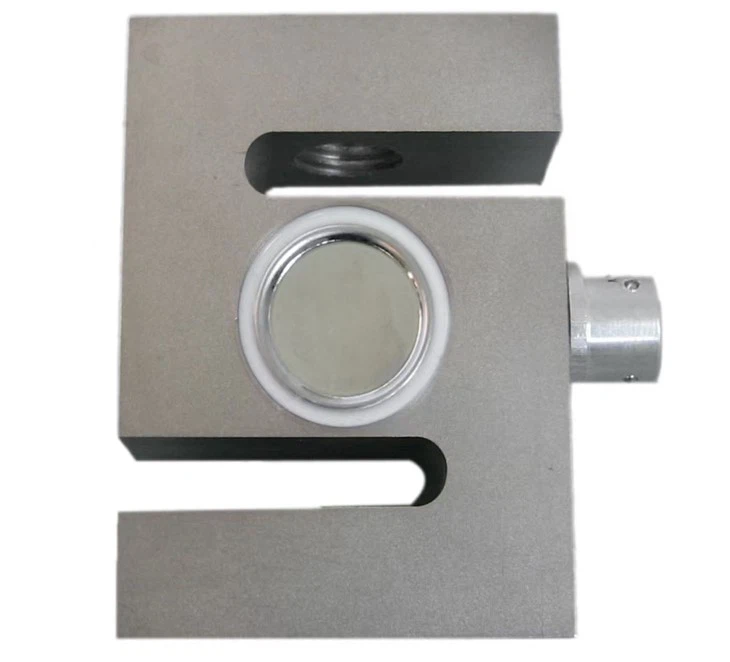
Let's start by comparing Bellow Beam Load Cells with S - Beam Load Cells. S - Beam Load Cells, as the name suggests, have an S - shaped design. They're commonly used in applications where tension and compression measurements are needed, like in hoists, cranes, and hanging scales.
One of the main differences is the way they handle force. S - Beam Load Cells are more focused on measuring forces along a single axis, either in tension or compression. They're really good at it, but they might not be as versatile as Bellow Beam Load Cells. Bellow Beam Load Cells can handle forces from multiple directions to some extent, thanks to their bellows design. This makes them a better choice for applications where the force might not be perfectly aligned.
Another difference is in their environmental resistance. S - Beam Load Cells are usually less protected against the elements compared to Bellow Beam Load Cells. If you're using them in a dirty or wet environment, you might need to take extra precautions to protect them. Bellow Beam Load Cells, on the other hand, can withstand a bit more abuse right out of the box.
Single Point Load Cells
Now, let's talk about Single Point Load Cells. These load cells are often used in platform scales, like the ones you see in warehouses or at shipping docks. They're designed to measure the weight placed on a single point on a platform.
Single Point Load Cells are great for applications where the load is evenly distributed over a small area. They're very accurate for this type of measurement. However, they're not as good at handling off - center loads. If the weight is placed off to one side of the platform, the accuracy can be affected.
Bellow Beam Load Cells, in contrast, can handle some degree of off - center loading. Their bellows design allows them to adapt to different force distributions, which means they can maintain a higher level of accuracy even when the load isn't perfectly centered. So, if you have an application where the load might not always be in the middle, a Bellow Beam Load Cell could be a better option.
Single - Ended Beam Load Cells
Lastly, let's look at Single - Ended Beam Load Cells. These load cells have a beam that's fixed at one end and free at the other. They're commonly used in applications like conveyor belt scales and small weighing platforms.

Single - Ended Beam Load Cells are relatively simple in design and are cost - effective for many applications. But they have limitations when it comes to measuring complex force patterns. They're mainly designed to measure forces in a specific direction along the beam.
Bellow Beam Load Cells offer more flexibility in terms of force measurement. They can handle forces from different angles and directions, which makes them suitable for a wider range of applications. Also, their environmental protection is better, so they can last longer in tough conditions.
Advantages of Bellow Beam Load Cells
So, what are the overall advantages of Bellow Beam Load Cells?
- Environmental Resistance: As I mentioned earlier, the bellows protect the internal components from dust, moisture, and mechanical shocks. This means they can be used in outdoor or dirty industrial settings without much worry.
- Versatility: They can handle forces from multiple directions and off - center loads, making them suitable for a wide variety of applications.
- Long - Term Durability: The design helps to reduce wear and tear on the internal sensing element, which means they can have a longer lifespan compared to some other load cells.
When to Choose Bellow Beam Load Cells
If you're working in an industry where the environment is harsh, like mining, construction, or food processing, Bellow Beam Load Cells are a great choice. They can withstand the dust, moisture, and vibrations that are common in these industries.
Also, if your application involves measuring forces that aren't always in a straight line or centered, Bellow Beam Load Cells will give you more accurate results. For example, in some robotic applications where the force exerted by the robot's arm can vary in direction, a Bellow Beam Load Cell would be ideal.
Conclusion
In conclusion, while there are many types of load cells out there, Bellow Beam Load Cells have some unique features that set them apart. Their environmental resistance, versatility, and durability make them a great option for a wide range of applications.
If you're in the market for load cells and think a Bellow Beam Load Cell might be right for your application, I'd love to chat with you. We can discuss your specific needs and see if our Bellow Beam Load Cells are the perfect fit. Don't hesitate to reach out for more information or to start a procurement discussion.
References
- "Load Cell Handbook" by John Doe
- "Industrial Weighing Systems: Principles and Applications" by Jane Smith

