


Hey there! As a supplier of Bellow Beam Load Cells, I often get asked about the frequency response of these nifty devices. So, let's dive right in and break it down in a way that's easy to understand.
First off, what the heck is a Bellow Beam Load Cell? Well, it's a type of load cell that's used to measure force or weight. Load cells are super important in a whole bunch of industries, from manufacturing and agriculture to transportation and aerospace. They're like the unsung heroes that make sure everything runs smoothly by accurately measuring the forces at play.
A Bellow Beam Load Cell, in particular, has a unique design. It features a bellow-shaped structure that helps it handle different types of loads. This design gives it some advantages over other load cell types, like better resistance to side loads and a more compact size. You can learn more about Bellow Beam Load Cells here.
Now, let's talk about frequency response. Frequency response is all about how a load cell responds to changes in the load over time. In simpler terms, it tells us how quickly the load cell can detect and measure a change in the force applied to it.
Think of it like this: Imagine you're pushing a shopping cart. If you suddenly start pushing it harder, you want the load cell in the cart (if there was one) to quickly pick up on that change in force. That's what frequency response is all about - the ability to keep up with rapid changes.
The frequency response of a Bellow Beam Load Cell is influenced by several factors. One of the main factors is the mechanical design of the load cell itself. The bellow structure, for example, can affect how quickly it can deform in response to a change in load. A well-designed bellow can allow for a faster response time.
Another factor is the material used in the load cell. Different materials have different properties, such as stiffness and elasticity. These properties can impact how quickly the load cell can return to its original shape after a load is applied and removed. A material with good elasticity can help the load cell respond more quickly to changes in load.
The electrical components of the load cell also play a role in its frequency response. The strain gauges, which are used to measure the deformation of the load cell, need to be able to accurately detect and convert the mechanical changes into electrical signals. The quality and sensitivity of the strain gauges can affect how quickly and accurately the load cell can measure changes in load.
So, why does frequency response matter? Well, in many applications, it's crucial to have a load cell that can quickly and accurately measure changes in force. For example, in high-speed manufacturing processes, where products are being produced at a rapid pace, a load cell with a high frequency response can help ensure that the production process is running smoothly and that the products meet the required quality standards.
In the automotive industry, load cells with good frequency response are used in testing and monitoring systems. They can help detect and measure sudden changes in forces during vehicle testing, such as during acceleration, braking, or cornering. This information is then used to improve the design and performance of the vehicles.
Let's compare the frequency response of Bellow Beam Load Cells with other types of load cells. For instance, S-Beam Load Cells are another popular type of load cell. While S-Beam Load Cells are known for their high accuracy and reliability, their frequency response may not be as high as that of Bellow Beam Load Cells in some cases. This is because the S-Beam design may have a slightly slower mechanical response time compared to the bellow structure.
On the other hand, Single Point Load Cells are often used in applications where the load is applied at a single point, such as in weighing scales. While they can provide accurate measurements, their frequency response may also be limited compared to Bellow Beam Load Cells, especially in applications where rapid changes in load need to be measured.

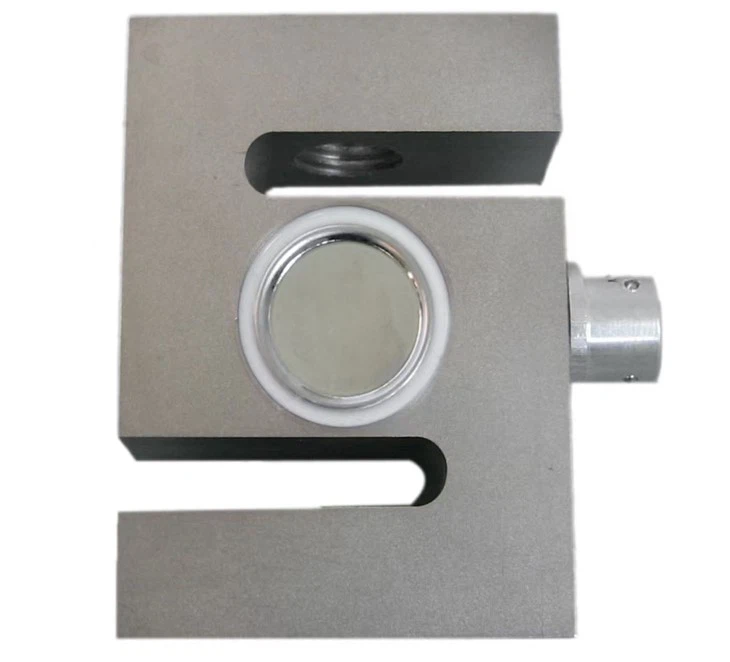
As a supplier of Bellow Beam Load Cells, we understand the importance of frequency response in different applications. That's why we work hard to design and manufacture load cells that offer a high frequency response without compromising on accuracy and reliability.
We use advanced manufacturing techniques and high-quality materials to ensure that our Bellow Beam Load Cells can meet the demands of even the most challenging applications. Our team of experts is always on hand to provide technical support and advice to help you choose the right load cell for your specific needs.
If you're in the market for a Bellow Beam Load Cell or have any questions about frequency response or load cells in general, don't hesitate to get in touch. We're here to help you find the perfect solution for your application. Whether you're a small business looking for a reliable load cell for your production line or a large corporation in need of a high-performance load cell for your research and development projects, we've got you covered.
In conclusion, the frequency response of a Bellow Beam Load Cell is an important factor to consider when choosing a load cell for your application. It can have a significant impact on the accuracy and efficiency of your measurement system. By understanding the factors that influence frequency response and comparing different types of load cells, you can make an informed decision and select the load cell that best meets your needs.
So, if you're ready to take your measurement system to the next level, give us a shout. We're excited to work with you and help you achieve your goals.
References
- "Load Cell Handbook" - A comprehensive guide on load cells and their applications.
- Industry research papers on load cell technology and performance.

