


Hey there! As a supplier of Bellow Beam Load Cells, I often get asked about the noise level of their output signals. It's a crucial aspect that can significantly impact the performance and accuracy of these load cells in various applications. So, let's dive right into it and explore what the noise level of a Bellow Beam Load Cell's output signal really is.
First off, let's understand what a Bellow Beam Load Cell is. It's a type of load cell that's designed to measure force or weight. You can learn more about it here. These load cells are widely used in industries like manufacturing, agriculture, and transportation because they're reliable and can handle different levels of loads.
Now, when we talk about the noise level of the output signal, we're referring to the unwanted electrical fluctuations that can occur in the signal. This noise can come from various sources, and it's important to understand them to manage and reduce the noise effectively.
One common source of noise is electromagnetic interference (EMI). In industrial settings, there are all sorts of electrical equipment like motors, generators, and power lines. These can generate strong electromagnetic fields that can interfere with the load cell's signal. For example, if a Bellow Beam Load Cell is installed near a large motor, the motor's electromagnetic field can cause the output signal to fluctuate, introducing noise.
Another source is thermal noise. As the load cell operates, it generates heat, and changes in temperature can affect the electrical properties of the components inside the load cell. This can lead to small variations in the output signal, which we perceive as noise. For instance, if the load cell is used in an environment where the temperature changes rapidly, like a cold storage facility or a hot manufacturing plant, thermal noise can become a significant issue.
Mechanical vibrations can also contribute to noise in the output signal. If the load cell is mounted in a location where there are vibrations, such as on a moving conveyor belt or near heavy machinery, these vibrations can cause the internal components of the load cell to move slightly. This movement can result in changes in the electrical resistance or capacitance of the load cell, leading to signal noise.
So, why is the noise level of the output signal such a big deal? Well, it all boils down to accuracy. In applications where precise measurements are required, even a small amount of noise can have a significant impact on the results. For example, in a weighing system used for quality control in a food processing plant, if the noise level is too high, it can lead to inaccurate weight measurements. This can result in over - or under - filling of packages, which can lead to product waste or customer dissatisfaction.
To deal with the noise issue, there are several techniques that can be employed. One of the most basic methods is proper grounding. By ensuring that the load cell is properly grounded, we can provide a path for the unwanted electrical currents to flow safely to the ground, reducing the impact of EMI.
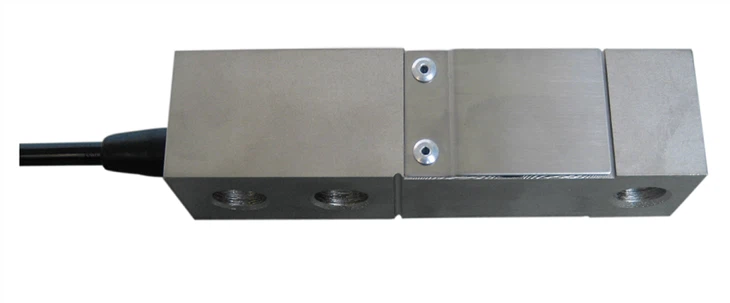

Shielding is another effective way to reduce noise. Using a shielded cable to connect the load cell to the measuring instrument can help block out external electromagnetic fields. The shield acts as a barrier, preventing the interference from reaching the signal wires inside the cable.
Filtering is also a common technique. Electronic filters can be used to remove specific frequencies of noise from the output signal. For example, a low - pass filter can be used to block high - frequency noise, allowing only the low - frequency signal (which contains the useful information about the load) to pass through.
Now, let's compare Bellow Beam Load Cells with other types of load cells in terms of noise levels. There are Single - Ended Beam Load Cells and S - Beam Load Cells, which are also popular in the industry.
Single - Ended Beam Load Cells are known for their simplicity and cost - effectiveness. They're often used in applications where moderate accuracy is required. However, they can be more susceptible to noise from mechanical vibrations compared to Bellow Beam Load Cells. This is because their design makes them more sensitive to external forces that can cause the beam to vibrate.
S - Beam Load Cells, on the other hand, are more versatile and can handle both tension and compression forces. They're commonly used in applications like crane scales and force testing machines. While they offer good accuracy, they can also be affected by noise, especially if they're not properly installed or if they're exposed to strong EMI sources.
In general, Bellow Beam Load Cells tend to have a relatively lower noise level compared to these other types in many applications. Their design provides better protection against mechanical vibrations and can be optimized to reduce the impact of thermal and electromagnetic noise.
If you're in the market for load cells and are concerned about the noise level of the output signal, we're here to help. Our Bellow Beam Load Cells are carefully designed and manufactured to minimize noise and provide accurate and reliable measurements. We have a team of experts who can assist you in choosing the right load cell for your specific application and can also offer advice on how to further reduce the noise level.
Whether you're working on a small - scale project or a large industrial application, our load cells can meet your needs. We understand that every customer's requirements are different, and we're committed to providing you with the best solutions. So, if you're interested in learning more or making a purchase, don't hesitate to reach out. We're looking forward to discussing your project and helping you find the perfect load cell for your needs.
References
- "Load Cell Handbook" by HBM
- "Industrial Instrumentation and Control" by B.C. Nakra and K.K. Chaudhry


