


What is the power consumption of a load cell?
As a leading load cell supplier in the market, we often encounter inquiries regarding the power consumption of load cells. Power consumption is a crucial factor, especially in applications where energy efficiency is a priority. In this blog post, we will explain what power consumption means in the context of load cells, what influences it, and how it impacts your applications.
Load cells are transducers that convert force, such as weight or pressure, into an electrical signal. They are widely used in various industries, including manufacturing, logistics, and healthcare, for weighing and force measurement tasks. But how do they operate in terms of energy use?
Most load cells operate based on the principle of strain gauges. When a load is applied to the load cell, the strain gauges within it deform, causing a change in their electrical resistance. This change in resistance is then converted into an electrical signal that can be measured and used to determine the applied force. The power consumption in a load cell is mainly related to the flow of electrical current through these strain gauges during this conversion process.
The power consumption of a load cell is typically measured in milliwatts (mW). It can be affected by several factors. One of the primary factors is the excitation voltage. The excitation voltage is the electrical voltage applied to the load cell to power the strain gauges. A higher excitation voltage will generally result in a higher power consumption because more electrical energy is needed to drive the current through the strain gauges. However, a higher excitation voltage can also provide a stronger output signal, which may be beneficial in applications where a high - level signal is required for accurate measurement.
Another important factor is the gauge factor of the strain gauges. The gauge factor is a measure of the sensitivity of the strain gauges to changes in strain. Load cells with a higher gauge factor will produce a larger change in resistance for a given amount of strain. While this can improve the measurement sensitivity, it can also lead to an increase in power consumption, as more electrical energy is needed to detect the relatively large change in resistance.
The type of load cell also plays a role in power consumption. For example, Industrial Strain Gauge Load Cell is a common type used in industrial weighing applications. These load cells are designed to handle heavy loads and often require a relatively stable excitation voltage. Due to their robust design and the need to accurately measure large forces, their power consumption might be different compared to other types.
Single - ended beam load cells, like the Single - Ended Beam Load Cell, are known for their simplicity and cost - effectiveness. They are often used in light - to medium - duty weighing applications. Their power consumption is generally lower compared to some other types because they are designed for less demanding measurement tasks and may use less complex circuitry.
Bellow beam load cells, such as the Bellow Beam Load Cell, are suitable for applications where there are side loads or off - center loads. Their unique design allows them to compensate for these non - ideal loading conditions. The power consumption of bellow beam load cells can vary depending on their size, capacity, and the specific design features used to achieve this compensation.
In battery - powered applications, the power consumption of load cells is of particular concern. For example, in portable weighing scales or remote sensing devices, minimizing power consumption is essential to extend the battery life. In such cases, load cells with low power consumption are preferred. Some modern load cells are specifically designed to operate with very low excitation voltages and have optimized circuitry to reduce power usage without sacrificing measurement accuracy.

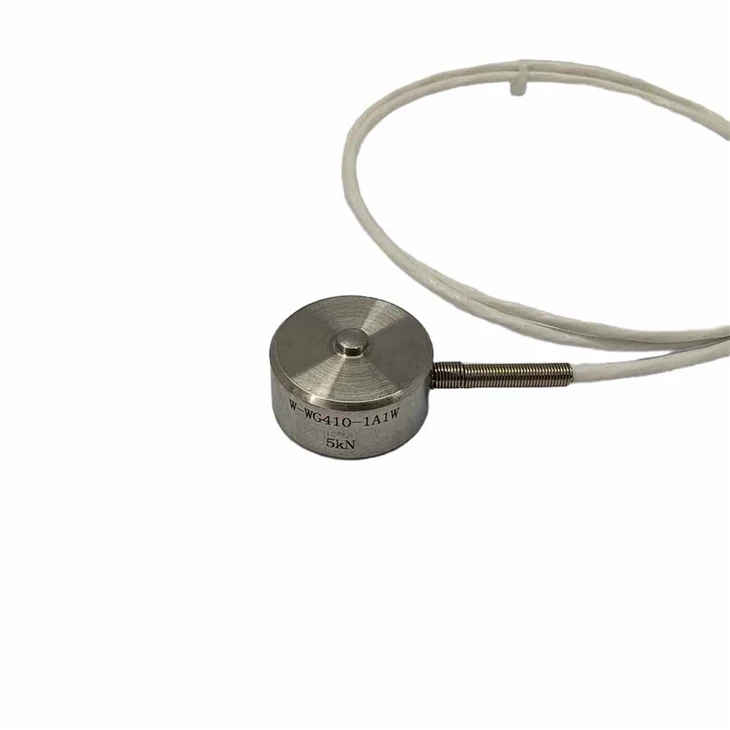
In industrial settings, power consumption also has cost implications. High - power - consuming load cells can lead to increased electricity bills over time, especially in large - scale weighing operations where multiple load cells are used. Therefore, it is important for businesses to consider the power consumption of load cells when making purchasing decisions.
Moreover, the power consumption can also affect the overall system stability. If a load cell consumes too much power, it may generate more heat, which can potentially cause thermal drift and affect the accuracy of the measurement. Thermal drift occurs when the output of the load cell changes due to temperature variations caused by power dissipation. To minimize this issue, load cells are often designed with proper heat - dissipation mechanisms and temperature compensation techniques.
When selecting a load cell for your application, it is crucial to balance power consumption with other important factors such as accuracy, capacity, and environmental resistance. For applications where high accuracy is required, you may need to accept a slightly higher power consumption. On the other hand, if energy efficiency is the top priority, you should look for load cells specifically engineered for low - power operation.
As a professional load cell supplier, we understand the importance of providing our customers with load cells that meet their specific requirements, including power consumption needs. Our team of experts can help you choose the most suitable load cell for your application, taking into account all the relevant factors.
If you are in the market for load cells and want to discuss your power consumption requirements, or any other aspects, we invite you to engage with us for a detailed purchasing negotiation. We can offer you professional advice, competitive prices, and high - quality products.
References
- "Load Cell Handbook" by HBM
- "Industrial Measurement Technology" published by John Wiley & Sons.

