


Hey there! As a supplier of Electromagnetic Flow Meters, I often get asked about what the signal output of an electromagnetic flow meter is. So, I thought I'd take a few minutes to break it down for you.
First off, let's talk a bit about how electromagnetic flow meters work. These nifty devices operate on Faraday's Law of Electromagnetic Induction. When a conductive fluid flows through a magnetic field generated by the meter, a voltage is induced across the fluid. This induced voltage is directly proportional to the velocity of the fluid flow. And that's the basic principle behind how we measure the flow rate using an electromagnetic flow meter.
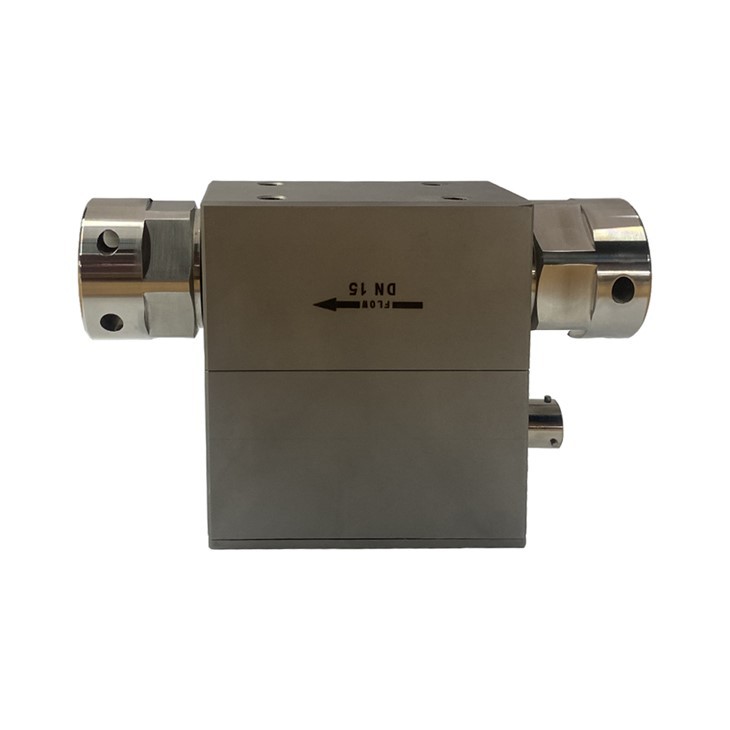

Now, let's get to the main topic - the signal output. The signal output of an electromagnetic flow meter is essentially the way the meter communicates the measured flow rate information to other devices or systems. There are several types of signal outputs commonly used in electromagnetic flow meters, and I'll go through each one of them.
Analog Signal Output
One of the most common types of signal outputs is the analog signal. The most widely used analog output is the 4 - 20 mA current loop signal. This type of signal is great because it's relatively simple and robust. The 4 mA represents the minimum flow rate (usually zero), and 20 mA represents the maximum flow rate that the meter is calibrated for.
For example, if you have an electromagnetic flow meter with a range of 0 - 100 cubic meters per hour, when there's no flow (0 m³/h), the output signal will be 4 mA. When the flow rate reaches 100 m³/h, the output will be 20 mA. And for any flow rate in between, the output will be a proportional value. For instance, at a flow rate of 50 m³/h, the output signal would be 12 mA.
The advantage of the 4 - 20 mA signal is that it's less susceptible to electrical noise compared to voltage signals. This makes it suitable for long - distance transmission, and it can be easily interfaced with many types of industrial control systems, such as Programmable Logic Controllers (PLCs) and Distributed Control Systems (DCS).
Digital Signal Output
In addition to analog signals, many modern electromagnetic flow meters also offer digital signal outputs. One popular digital communication protocol is Modbus. Modbus is a serial communication protocol that allows the flow meter to communicate with other devices over a wired network.
With Modbus, you can access a wide range of information from the flow meter, not just the flow rate. You can also get data on things like totalized flow, fluid temperature, and diagnostic information. It's a very flexible and widely used protocol in the industrial automation space.
Another digital option is HART (Highway Addressable Remote Transducer). HART combines both analog and digital communication on the same pair of wires. The analog 4 - 20 mA signal is used for the primary flow measurement, while the digital HART signal is used to transmit additional information and to configure the flow meter. This dual - mode communication makes it possible to upgrade existing systems without having to replace the entire wiring infrastructure.
Pulse Signal Output
Some electromagnetic flow meters also provide a pulse signal output. A pulse is a short, sharp electrical signal. Each pulse represents a specific volume of fluid that has passed through the meter. For example, one pulse could represent 1 liter of fluid.
Pulse outputs are often used for applications where you need to measure the total volume of fluid over a period of time. You can simply count the number of pulses and multiply it by the volume per pulse to get the total volume. This type of output is also useful for simple control applications, like filling a tank to a certain volume.
Why Signal Output Matters
The choice of signal output is crucial because it determines how the flow meter will integrate with your existing system. If you have an older system that only supports analog signals, then a 4 - 20 mA output is your best bet. On the other hand, if you're running a modern, data - driven industrial plant, a digital output like Modbus or HART will give you more flexibility and a wealth of additional information.
As a supplier of Electromagnetic Flow Meters, we understand the importance of providing the right signal output options for our customers. Whether you need a simple analog output for a basic application or a sophisticated digital output for a complex industrial process, we've got you covered.
We also offer Intrinsically Safe Flowmeter options, which are designed for use in hazardous environments where there's a risk of explosion. These flow meters have special signal output configurations to ensure safe and reliable operation.
Contact Us for Your Flow Meter Needs
If you're in the market for an electromagnetic flow meter and aren't sure which signal output is right for your application, don't worry! Our team of experts is here to help you make the best decision. We can provide you with detailed information about each type of signal output, how it works, and which one would be the most suitable for your specific requirements.
We're committed to delivering high - quality flow meters with accurate and reliable signal outputs. So, if you're interested in purchasing an electromagnetic flow meter or have any questions, please don't hesitate to reach out. We're looking forward to working with you to find the perfect flow measurement solution for your business.
References
- "Industrial Flow Measurement Handbook", by John G. Wohlfarth
- "Flow Measurement Engineering Handbook", by Richard W. Miller

