


Humidity is an environmental factor that can significantly influence the performance of various sensors and measurement devices. As a supplier of Single - Ended Beam Load Cells, I've witnessed firsthand how humidity can impact these precision instruments. In this blog, we'll explore the ways in which humidity affects a Single - Ended Beam Load Cell and what measures can be taken to mitigate these effects.
Understanding Single - Ended Beam Load Cells
Before delving into the impact of humidity, let's briefly understand what a Single - Ended Beam Load Cell is. A Single - Ended Beam Load Cell is a type of force sensor that converts mechanical force into an electrical signal. It consists of a beam that is fixed at one end and free at the other, with strain gauges attached to the beam. When a force is applied to the free end of the beam, it causes the beam to deform, and the strain gauges measure this deformation. The change in resistance of the strain gauges is then converted into an electrical signal proportional to the applied force.
How Humidity Affects Single - Ended Beam Load Cells
1. Electrical Properties
One of the primary ways humidity affects Single - Ended Beam Load Cells is through its impact on the electrical properties of the strain gauges. Strain gauges are made of thin metal foils or wires, and their resistance is crucial for accurate force measurement. High humidity can cause moisture to accumulate on the surface of the strain gauges. Moisture is a conductor of electricity, and when it comes into contact with the strain gauges, it can create a parallel electrical path. This parallel path can cause a change in the overall resistance of the strain gauge circuit, leading to inaccurate force measurements.
For example, if the moisture creates a low - resistance path across the strain gauge, the measured resistance will be lower than the actual resistance corresponding to the applied force. This can result in an overestimation of the force being measured. On the other hand, if the moisture causes corrosion or damage to the strain gauge material, the resistance may increase, leading to an underestimation of the force.
2. Mechanical Properties
Humidity can also affect the mechanical properties of the load cell beam. Most load cell beams are made of metals such as steel or aluminum. When exposed to high humidity, these metals can undergo corrosion. Corrosion is a chemical reaction between the metal and moisture in the air, which can weaken the structure of the beam.
As the beam weakens, its stiffness and elasticity change. The stiffness of the beam is related to how much it deforms under a given force. A corroded beam may deform more easily than a non - corroded beam, even under the same applied force. This means that the relationship between the applied force and the deformation of the beam, which is the basis for force measurement in a load cell, is no longer linear. As a result, the load cell may provide inaccurate force readings.
3. Sealing and Protection
Load cells are often sealed to protect the internal components from environmental factors such as humidity. However, over time, the seals can degrade due to exposure to high humidity, temperature changes, and mechanical stress. If the seals are compromised, moisture can enter the load cell housing and come into contact with the strain gauges and other sensitive components.
Once moisture enters the load cell, it can cause the problems mentioned above, such as changes in electrical resistance and corrosion of the beam. Additionally, moisture can also cause the growth of mold and fungi inside the load cell, which can further damage the components and affect the performance of the load cell.
Mitigating the Effects of Humidity
1. Proper Sealing
As a supplier, we take great care in ensuring that our Single - Ended Beam Load Cells are properly sealed. We use high - quality sealing materials that are resistant to moisture, temperature changes, and chemical exposure. The seals are designed to prevent moisture from entering the load cell housing, even in harsh environmental conditions.
For example, we use O - rings and gaskets made of materials such as silicone or fluorocarbon, which have excellent sealing properties and are resistant to moisture. We also apply a protective coating to the outside of the load cell housing to provide an additional barrier against moisture.
2. Environmental Monitoring
In applications where humidity is a significant concern, it is advisable to monitor the environmental conditions around the load cell. This can be done using humidity sensors placed near the load cell. By continuously monitoring the humidity levels, operators can take appropriate actions if the humidity exceeds a certain threshold.
For example, if the humidity levels are too high, operators can use dehumidifiers to reduce the moisture in the air. They can also take steps to improve the ventilation in the area where the load cell is installed, which can help to prevent the accumulation of moisture.
3. Material Selection
The choice of materials for the load cell beam and other components can also play a crucial role in mitigating the effects of humidity. We use corrosion - resistant materials for the beam, such as stainless steel or aluminum alloys with a high resistance to corrosion. These materials are less likely to be affected by humidity and can maintain their mechanical properties over a longer period.
In addition to the beam material, we also select strain gauges and other electrical components that are designed to be resistant to moisture. For example, some strain gauges are coated with a protective layer that prevents moisture from coming into contact with the metal foil or wire.
Comparison with Other Types of Load Cells
It's interesting to compare how humidity affects Single - Ended Beam Load Cells with other types of load cells, such as Bellow Beam Load Cells and Single Point Load Cells.
Bellow Beam Load Cells have a different mechanical structure compared to Single - Ended Beam Load Cells. The bellow structure provides some flexibility and can absorb some of the effects of environmental factors. However, the bellow can also trap moisture if not properly designed and sealed. If moisture accumulates inside the bellow, it can cause similar problems as in Single - Ended Beam Load Cells, such as changes in electrical properties and corrosion of the internal components.
Single Point Load Cells are designed to measure forces applied at a single point. They are often used in applications such as weighing scales. Similar to Single - Ended Beam Load Cells, Single Point Load Cells are also sensitive to humidity. The strain gauges and other components in Single Point Load Cells can be affected by moisture, leading to inaccurate force measurements. However, the design of Single Point Load Cells may provide some advantages in terms of sealing and protection, as they are often more compact and easier to seal compared to larger load cells.
Conclusion
Humidity is a significant environmental factor that can affect the performance of Single - Ended Beam Load Cells. It can impact the electrical and mechanical properties of the load cell, leading to inaccurate force measurements. However, by taking appropriate measures such as proper sealing, environmental monitoring, and material selection, these effects can be mitigated.

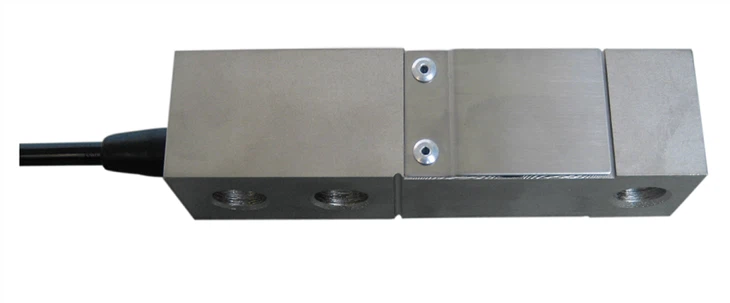
As a supplier of Single - Ended Beam Load Cells, we are committed to providing high - quality products that are reliable and accurate, even in challenging environmental conditions. If you are in need of a load cell for your application and have concerns about humidity or other environmental factors, we encourage you to contact us for a detailed consultation. Our team of experts can help you select the right load cell and provide you with solutions to ensure its optimal performance.
References
- Ono, K., & Takada, K. (1998). Influence of humidity on the performance of strain gauges. Sensors and Actuators A: Physical, 66(1 - 3), 243 - 247.
- Tse, P. W., & Chan, H. L. W. (2003). Corrosion of metals in humid environments. Journal of Materials Science, 38(10), 2029 - 2040.
- Smith, J. R. (2010). Sealing techniques for load cells. Proceedings of the International Instrumentation and Measurement Technology Conference, 1 - 4.

