


Hey there! As a flow meter supplier, I often get asked about the flow acoustic content of a flow meter. So, I thought I'd take a moment to break it down for you in a way that's easy to understand.
First off, let's talk about what flow acoustic content actually means. In simple terms, it refers to the sounds and vibrations that are generated by the flow of fluid through a flow meter. These acoustic signals can tell us a lot about the fluid's characteristics, like its velocity, density, and viscosity.
Now, you might be wondering why this is important. Well, understanding the flow acoustic content can help us accurately measure the flow rate of the fluid. Different types of flow meters use different methods to detect and analyze these acoustic signals. For example, some flow meters use ultrasonic waves to measure the flow velocity. The ultrasonic waves are sent through the fluid, and the changes in the wave's properties, such as its frequency and phase, are measured to determine the flow rate.
Let's dive a bit deeper into how this works. When a fluid flows through a pipe, it creates disturbances in the surrounding medium. These disturbances generate acoustic waves that can be detected by sensors placed on the flow meter. The sensors convert these acoustic waves into electrical signals, which are then processed by the flow meter's electronics.
One of the key advantages of using acoustic methods to measure flow is that they can provide non - intrusive measurements. This means that the flow meter doesn't need to be in direct contact with the fluid, which is great for applications where the fluid is corrosive, abrasive, or otherwise difficult to handle.
There are also some challenges associated with measuring flow acoustic content. For instance, background noise can interfere with the acoustic signals, making it harder to accurately measure the flow rate. To overcome this, flow meters are often equipped with advanced signal processing algorithms that can filter out the unwanted noise and enhance the relevant acoustic signals.
Another factor to consider is the type of fluid being measured. Different fluids have different acoustic properties, which can affect the way the acoustic signals are generated and detected. For example, a highly viscous fluid will generate different acoustic signals compared to a low - viscosity fluid.
Now, let's talk about the different types of flow meters that rely on flow acoustic content. One popular type is the Electromagnetic Flow Meter. This type of flow meter works based on Faraday's law of electromagnetic induction. When a conductive fluid flows through a magnetic field, a voltage is induced, which is proportional to the flow velocity. While it doesn't strictly rely on acoustic signals, it's still a very effective way to measure flow, especially for conductive fluids like water and some chemicals.
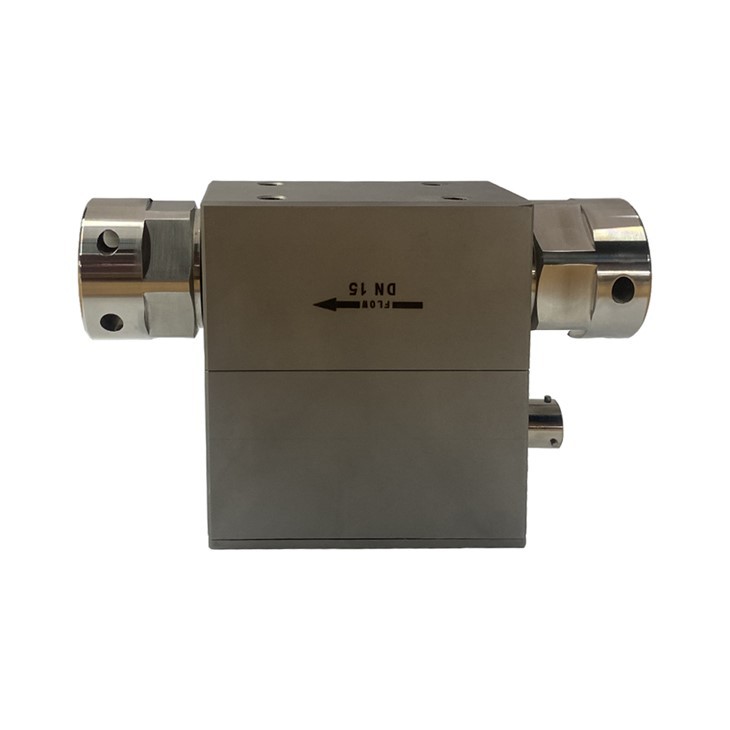
Another type is the Intrinsically Safe Flowmeter. These flow meters are designed for use in hazardous environments where there is a risk of explosion. They use acoustic or other non - electrical methods to measure flow, ensuring that there is no risk of sparking or other electrical hazards.
As a flow meter supplier, we understand the importance of providing accurate and reliable flow measurement solutions. That's why we offer a wide range of flow meters that are designed to meet the diverse needs of our customers. Whether you're measuring the flow of water in a municipal water supply system or the flow of a highly corrosive chemical in an industrial plant, we've got you covered.
If you're in the market for a flow meter, we'd love to have a chat with you. Our team of experts can help you determine the best type of flow meter for your specific application, taking into account factors like the type of fluid, the flow rate, and the operating environment. We can also provide you with detailed information about the flow acoustic content and how it relates to the performance of the flow meter.
So, if you're interested in learning more or discussing your flow measurement needs, don't hesitate to reach out. We're here to help you find the perfect flow meter solution for your business.
References

- "Flow Measurement Handbook: Industrial Designs and Applications" by Richard W. Miller
- "Instrumentation, Measurement, and Analysis" by B. C. Nakra and K. K. Chaudhry

