


Hey there! As a supplier of Single Point Load Cells, I often get asked about the differences between strain - gauge single point load cells and other types. So, let's dive right in and break it down.
First off, what's a load cell? Well, it's a transducer that converts a force into an electrical signal. In simple terms, it measures how much weight or force is being applied to it. There are several types of load cells out there, but today we're focusing on the strain - gauge single point load cell and how it stacks up against others.
Strain - Gauge Single Point Load Cell Basics
A strain - gauge single point load cell is a pretty nifty piece of tech. It's designed to measure loads that are applied at a single point. The way it works is based on the principle of strain gauges. When a force is applied to the load cell, it causes a deformation in the metal structure. Strain gauges are attached to this structure, and as the metal deforms, the resistance of the strain gauges changes. This change in resistance is then converted into an electrical signal that can be measured and used to determine the applied force.

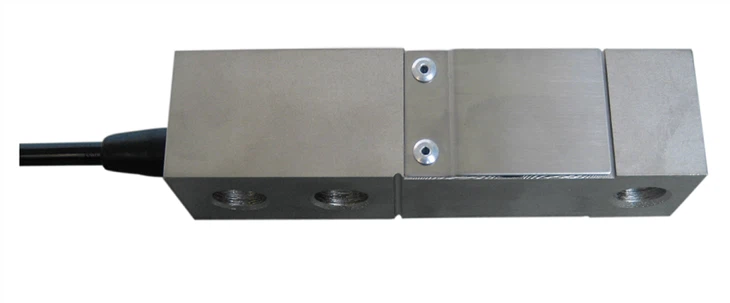
One of the key features of a single point load cell is its ability to handle off - center loads. That means you don't have to be super precise about where you place the load on the cell. It can still give you an accurate measurement. This makes it ideal for applications like weighing scales, where the object being weighed might not be perfectly centered. You can check out more about Single Point Load Cell on our website.
Comparing with S - Beam Load Cells
Now, let's talk about S - Beam Load Cell. S - beam load cells, as the name suggests, have an S - shaped design. They're commonly used in applications where you need to measure tension or compression forces. Unlike single point load cells, S - beam load cells are more sensitive to the direction of the applied force.
S - beam load cells are great for applications like crane scales, where you're measuring the weight of an object hanging from a hook. They're designed to handle large forces and are often used in industrial settings. However, they're not as forgiving when it comes to off - center loads. If the load is not applied exactly in the right direction, it can lead to inaccurate measurements.
In terms of accuracy, both single point and S - beam load cells can be very precise. But single point load cells are generally better for applications where the load placement might vary, while S - beam load cells are better for applications with a well - defined load direction.
Comparing with Single - Ended Beam Load Cells
Another type of load cell is the Single - Ended Beam Load Cell. Single - ended beam load cells have a beam - like structure with one end fixed and the other end free to move when a load is applied.
These load cells are often used in applications where space is limited. They're relatively small and can be easily integrated into different systems. However, like S - beam load cells, they're also sensitive to the location and direction of the applied load. They work best when the load is applied at a specific point on the beam.
Single point load cells, on the other hand, offer more flexibility in load placement. They can be used in a wider range of applications, especially those where the load might not be centered or where there's some movement in the load position.
Advantages of Strain - Gauge Single Point Load Cells
One of the biggest advantages of strain - gauge single point load cells is their simplicity. They're easy to install and use. You don't need to worry too much about aligning the load perfectly, which saves time and effort.
They're also very cost - effective. For many applications, especially those in the consumer and small - scale industrial sectors, single point load cells offer a great balance between performance and price.
In addition, single point load cells are highly reliable. They have a long lifespan and can withstand a lot of wear and tear. This makes them a popular choice for applications that require continuous or long - term use.
Disadvantages of Strain - Gauge Single Point Load Cells
Of course, no load cell is perfect. One of the limitations of single point load cells is their relatively lower capacity compared to some other types, like S - beam load cells. If you need to measure very large forces, a single point load cell might not be the best choice.
They also have some limitations in terms of the range of load directions they can handle. While they're good at handling off - center loads, they might not be suitable for applications where the load is applied at extreme angles.
Applications of Strain - Gauge Single Point Load Cells
Single point load cells are used in a wide variety of applications. Some of the most common ones include:
- Weighing Scales: As mentioned earlier, single point load cells are perfect for weighing scales. Whether it's a kitchen scale, a retail scale, or an industrial weighing platform, they can provide accurate measurements even if the object is not centered.
- Vending Machines: In vending machines, single point load cells are used to measure the weight of the products. This helps in inventory management and ensures that the machine dispenses the correct amount of product.
- Food Processing: In the food industry, single point load cells are used for weighing ingredients, portion control, and quality control. They can handle the moist and sometimes harsh environments found in food processing plants.
Making the Right Choice
So, how do you decide which load cell is right for your application? Well, it all depends on your specific needs. If you need to measure off - center loads and don't have a lot of space for a complex installation, a single point load cell might be the way to go. If you're dealing with large forces and need to measure tension or compression in a well - defined direction, an S - beam load cell could be a better choice. And if space is a major concern and you have a relatively small and well - positioned load, a single - ended beam load cell might be suitable.
Contact Us for Your Load Cell Needs
If you're still not sure which load cell is best for your application, or if you're interested in purchasing single point load cells, don't hesitate to reach out. We have a team of experts who can help you make the right decision and provide you with high - quality load cells at competitive prices.
References
- "Load Cell Handbook" - A comprehensive guide on load cell technology and applications.
- Industry research reports on load cell usage in different sectors.

