


In the realm of industrial fluid measurement, flow meters play a pivotal role. They are essential tools for accurately quantifying the flow rate of various fluids in numerous applications, from chemical processing plants to water treatment facilities. One crucial aspect that often comes into play when dealing with flow meters is the high - abrasiveness content of the flow. In this blog, as a flow meter supplier, I'll delve into what the flow high - abrasiveness content means, its implications for flow meters, and how we can address these challenges.
Understanding High - Abrasiveness Content in a Flow
High - abrasiveness content refers to the presence of solid particles or abrasive substances within the fluid that is being measured by the flow meter. These particles can vary in size, shape, and hardness. For example, in mining operations, slurries containing large amounts of sand, gravel, and ore particles are common. In the oil and gas industry, fluids may carry abrasive materials such as drilling mud solids or scale particles.
The abrasiveness of these particles is determined by several factors. Firstly, the hardness of the particles is a key factor. Harder particles, such as quartz or diamond - like substances, are more likely to cause wear and tear on the internal components of a flow meter. Secondly, the size of the particles matters. Larger particles can cause more significant physical damage through impact, while smaller particles can act like fine sandpaper, gradually eroding the surfaces over time. The shape of the particles also plays a role; sharp - edged particles are more abrasive than rounded ones.
Implications for Flow Meters
The high - abrasiveness content in a flow can have several detrimental effects on flow meters. One of the most obvious impacts is on the accuracy of the measurement. As the abrasive particles wear down the internal components of the flow meter, such as the measuring tube, electrodes (in the case of Electromagnetic Flow Meter), or turbine blades, the flow meter's ability to accurately detect and measure the flow rate can be compromised. This can lead to inaccurate readings, which in turn can cause problems in process control, quality assurance, and cost accounting.
Another significant issue is the reduced lifespan of the flow meter. The continuous abrasion can lead to premature failure of the flow meter. Components may need to be replaced frequently, increasing maintenance costs and downtime. For example, in a pipeline where a high - abrasive slurry is flowing, a poorly - selected flow meter may need its internal parts replaced every few months, disrupting the normal operation of the system.
Challenges in Measuring High - Abrasive Flows
Measuring high - abrasive flows presents several challenges. One of the main challenges is selecting the right type of flow meter. Not all flow meters are suitable for handling high - abrasiveness content. For instance, some mechanical flow meters, like turbine flow meters, may not be ideal as the abrasive particles can quickly damage the turbine blades, affecting their rotation and thus the measurement accuracy.
Another challenge is the need for proper material selection. The internal components of the flow meter need to be made of materials that can withstand the abrasion. For example, ceramic materials are often used in some flow meters due to their high hardness and wear resistance. However, using such materials can increase the cost of the flow meter.
Solutions for Measuring High - Abrasive Flows
As a flow meter supplier, we offer several solutions to address the challenges posed by high - abrasiveness content in a flow.
Flow Meter Selection
We have a wide range of flow meters to choose from, each with its own advantages for different applications. For high - abrasive flows, Electromagnetic Flow Meter can be a great option. These flow meters have no moving parts in contact with the fluid, which reduces the risk of damage from abrasive particles. They work based on Faraday's law of electromagnetic induction, and the measuring tube can be lined with abrasion - resistant materials such as rubber or PTFE.
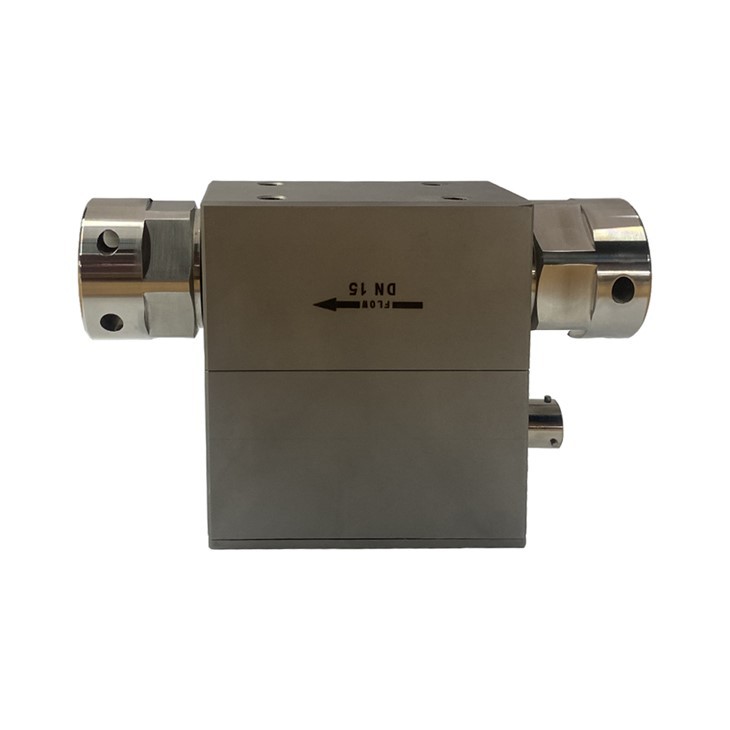
Another option is the Intrinsically Safe Flowmeter. These flow meters are designed to be safe in hazardous environments and can also be configured to handle high - abrasive fluids. They use advanced sensor technologies that are less susceptible to damage from abrasion.
Material Selection
We pay close attention to the material selection for our flow meters. For the parts that come into contact with the high - abrasive fluid, we use materials such as tungsten carbide, silicon carbide, and ceramic. These materials have excellent wear resistance and can significantly extend the lifespan of the flow meter. For example, in our electromagnetic flow meters, the electrodes can be made of tungsten carbide to withstand the abrasion from the particles in the fluid.
Design Optimization
Our engineering team also focuses on optimizing the design of the flow meters to reduce the impact of abrasion. We use computational fluid dynamics (CFD) simulations to analyze the flow patterns inside the flow meter and make adjustments to minimize the areas where the abrasive particles are likely to cause the most damage. For example, we can design the flow path in such a way that the particles are less likely to collide with sensitive components.
Case Studies
Let's take a look at a couple of case studies to illustrate how our solutions have worked in real - world scenarios.
In a mining company, they were using a traditional turbine flow meter to measure the flow of a high - abrasive slurry. The turbine blades were quickly damaged, leading to inaccurate measurements and frequent maintenance. After consulting with our experts, they switched to an electromagnetic flow meter with a ceramic - lined measuring tube. The new flow meter not only provided accurate measurements but also had a much longer lifespan, reducing their maintenance costs and downtime significantly.
In an oil refinery, they had a problem with measuring a fluid containing scale particles. The previous flow meter was not able to handle the abrasion, and the readings were unreliable. We recommended an intrinsically safe flowmeter with tungsten carbide sensors. This flow meter was able to withstand the abrasion and provided stable and accurate measurements, improving the overall process control in the refinery.
Conclusion
The high - abrasiveness content in a flow is a significant challenge in the field of flow measurement. It can affect the accuracy and lifespan of flow meters, leading to various problems in industrial processes. However, as a flow meter supplier, we have the expertise and solutions to address these challenges. Through proper flow meter selection, material selection, and design optimization, we can provide flow meters that can accurately measure high - abrasive flows and have a long service life.
If you are facing challenges with measuring high - abrasive flows in your industry, we are here to help. Our team of experts can work with you to understand your specific requirements and recommend the most suitable flow meter solutions. Contact us for more information and to start a procurement discussion. We look forward to partnering with you to solve your flow measurement problems.

References
- "Flow Measurement Handbook: Industrial Designs and Applications" by Richard W. Miller
- "Abrasive Wear: Mechanisms and Testing" by various authors in the Journal of Tribology


