


In the world of industrial automation and process control, process transmitters play a pivotal role. As a leading process transmitter supplier, I've encountered numerous inquiries about various aspects of these devices. One question that often surfaces is, "What is the hysteresis of a process transmitter?" In this blog, I'll delve deep into the concept of hysteresis in process transmitters, its implications, and why it matters in industrial applications.
Understanding Hysteresis
Hysteresis is a phenomenon that occurs when the output of a system depends not only on its current input but also on its past inputs. In the context of a process transmitter, hysteresis refers to the difference in output values for the same input value, depending on whether the input is increasing or decreasing. To put it simply, if you apply a certain pressure or temperature to a transmitter, the output reading might be different when you're ramping up the input compared to when you're ramping it down.
Let's take a pressure transmitter as an example. When you gradually increase the pressure applied to the transmitter, it will provide a series of output readings corresponding to the increasing pressure values. Now, if you start decreasing the pressure back to the original value, the output readings might not exactly match the ones you got during the increasing phase. This discrepancy is the hysteresis.
Causes of Hysteresis in Process Transmitters
There are several factors that can contribute to hysteresis in process transmitters. One of the primary causes is the mechanical properties of the sensing element. Most process transmitters use a sensing element, such as a diaphragm or a strain gauge, to detect changes in the process variable (e.g., pressure, temperature). These sensing elements are made of materials that can exhibit elastic and plastic deformation. When the input changes, the sensing element deforms, and during the reverse process, it might not return to its exact original shape immediately. This mechanical behavior leads to differences in the output readings.
Another factor is the electrical characteristics of the transmitter's circuitry. The signal conditioning and conversion circuits in a transmitter can introduce small errors due to factors like component tolerances, temperature effects, and electrical noise. These errors can accumulate and contribute to hysteresis in the overall output.
Implications of Hysteresis in Industrial Applications
Hysteresis can have significant implications for industrial processes. In applications where precise measurement and control are crucial, such as in chemical plants, pharmaceutical manufacturing, and power generation, even a small amount of hysteresis can lead to inaccurate readings and control decisions. For example, in a chemical reactor, the pressure needs to be maintained within a very narrow range to ensure the safety and efficiency of the reaction. If the pressure transmitter has a high hysteresis, the control system might receive incorrect pressure readings, leading to over- or under-pressurization of the reactor, which can have serious consequences.
In addition, hysteresis can affect the calibration and performance of the transmitter over time. If the hysteresis is not accounted for during calibration, the transmitter might provide inaccurate readings even after calibration. This can result in increased maintenance costs and downtime as the transmitter needs to be recalibrated more frequently.

Measuring and Minimizing Hysteresis
As a process transmitter supplier, we take hysteresis very seriously. We use advanced testing and calibration techniques to measure the hysteresis of our transmitters. During the manufacturing process, each transmitter is subjected to a series of tests where the input is increased and decreased in a controlled manner, and the output readings are recorded. The difference between the increasing and decreasing output values is then calculated to determine the hysteresis.
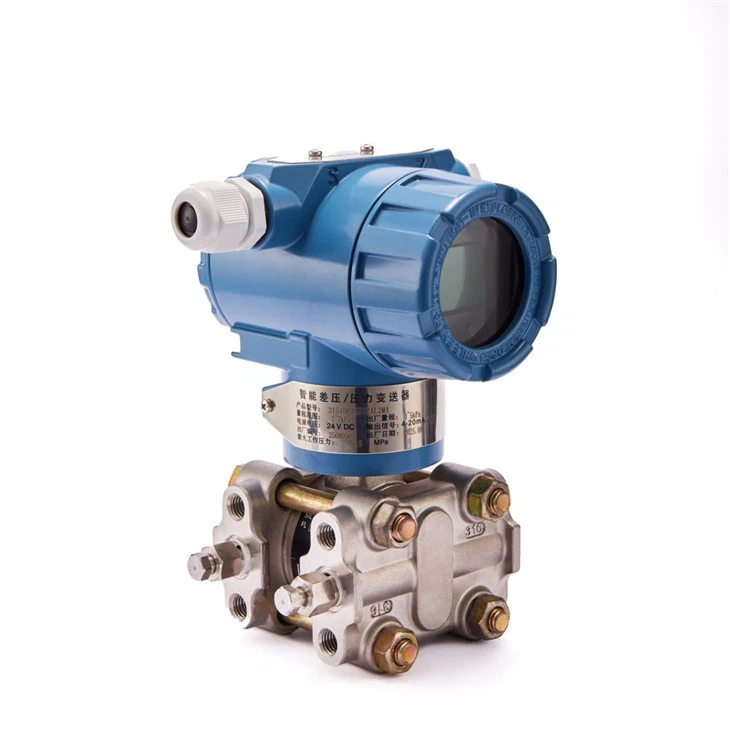
To minimize hysteresis, we use high-quality materials for the sensing elements and design our transmitters with precision. For example, our Absolute / Gauge Pressure Transmitter uses a state-of-the-art diaphragm made of a special alloy that has excellent elastic properties, reducing the mechanical hysteresis. Our Metal Capacitive Differential Pressure Transmitter also incorporates advanced signal conditioning circuits that are designed to minimize electrical errors and hysteresis.
Importance of Low Hysteresis in Process Transmitters
Low hysteresis is crucial for ensuring the accuracy and reliability of process transmitters. In industries where safety and quality are of utmost importance, such as the food and beverage industry and the aerospace industry, low-hysteresis transmitters are essential. For example, in the food and beverage industry, precise temperature and pressure control are necessary to ensure the quality and safety of the products. A transmitter with low hysteresis can provide accurate readings, allowing the control system to make precise adjustments and maintain the desired process conditions.
In the aerospace industry, where the performance of aircraft systems depends on accurate measurement of various parameters, low-hysteresis transmitters are used to monitor critical functions such as fuel pressure, cabin pressure, and engine temperature. Any inaccuracies due to hysteresis can have serious implications for the safety and performance of the aircraft.
How to Choose a Process Transmitter with Low Hysteresis
When choosing a process transmitter, it's important to consider the hysteresis specification. Look for transmitters that have a low hysteresis value, typically expressed as a percentage of the full-scale output. A lower hysteresis value indicates better performance and accuracy. In addition to the hysteresis specification, also consider other factors such as the accuracy, repeatability, and reliability of the transmitter.
It's also a good idea to choose a transmitter from a reputable supplier. As a process transmitter supplier, we have a long history of providing high-quality transmitters with low hysteresis. Our products are designed and manufactured to meet the strictest industry standards, and we offer comprehensive technical support and after-sales service.
Conclusion
In conclusion, hysteresis is an important concept in the world of process transmitters. It can have significant implications for industrial processes, and it's crucial to understand its causes, effects, and how to minimize it. As a process transmitter supplier, we are committed to providing our customers with high-quality transmitters that have low hysteresis and excellent performance. If you're in the market for a process transmitter and need more information about hysteresis or our products, please feel free to contact us for a detailed discussion and to explore the best solutions for your specific application.
References
- "Industrial Instrumentation and Control Systems" by B.C. Nakra and K.K. Chaudhry
- "Process Control: Principles and Applications" by D. R. Coughanowr and S. E. LeBlanc

