


Hey there! As a flow meter supplier, I often get asked about how different types of flow meters work. One of the most commonly used and fascinating ones is the magnetic flow meter. In this blog, I'll break down the working principle of a magnetic flow meter in a way that's easy to understand.
The Basics of Magnetic Flow Meters
Let's start with what a magnetic flow meter is. It's a device used to measure the flow rate of conductive fluids in a pipe. These fluids can be anything from water and wastewater to various chemicals. The cool thing about magnetic flow meters is that they don't have any moving parts inside the pipe, which means less wear and tear and a longer lifespan.
Faraday's Law of Electromagnetic Induction
The working principle of a magnetic flow meter is based on Faraday's Law of Electromagnetic Induction. Michael Faraday, a famous scientist from the 19th century, discovered that when a conductor moves through a magnetic field, an electromotive force (EMF) is induced in the conductor. This is the same principle that's used in generators to produce electricity.
In a magnetic flow meter, the conductive fluid flowing through the pipe acts as the conductor. The meter has a pair of coils that create a magnetic field across the pipe. When the conductive fluid passes through this magnetic field, an EMF is induced in the fluid. The strength of this induced EMF is directly proportional to the velocity of the fluid.
How the Induced EMF is Measured
To measure the induced EMF, the magnetic flow meter has two electrodes installed on the inner wall of the pipe, perpendicular to the magnetic field and the direction of fluid flow. These electrodes pick up the induced voltage, which is then sent to the meter's transmitter.
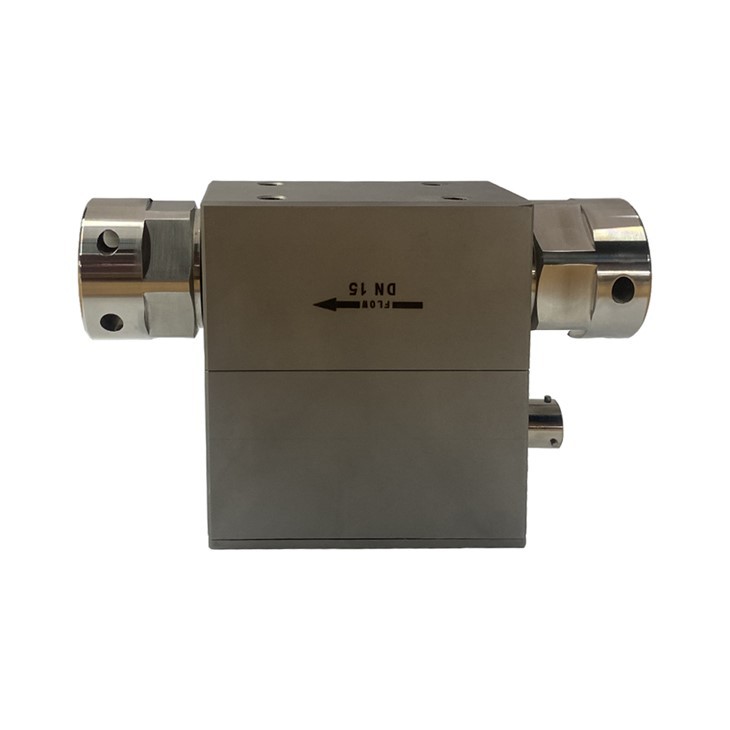

The transmitter is the brain of the magnetic flow meter. It processes the voltage signal received from the electrodes and converts it into a flow rate measurement. It takes into account factors like the pipe diameter, the strength of the magnetic field, and the conductivity of the fluid to calculate the accurate flow rate.
Key Components of a Magnetic Flow Meter
- Magnetic Coils: These are responsible for creating the magnetic field across the pipe. The strength and stability of the magnetic field are crucial for accurate flow measurement.
- Electrodes: As mentioned earlier, they pick up the induced EMF from the flowing fluid. The quality of the electrodes and their contact with the fluid can affect the accuracy of the measurement.
- Transmitter: It processes the signal from the electrodes and provides the final flow rate reading. Modern transmitters can also offer additional features like digital communication, diagnostic functions, and display options.
Advantages of Magnetic Flow Meters
- No Moving Parts: This reduces the risk of mechanical failure and maintenance requirements. It also means there's no pressure drop across the meter, which can save energy in pumping systems.
- High Accuracy: Magnetic flow meters can provide accurate flow measurements, even for fluids with varying viscosities and densities. They are suitable for a wide range of applications, from industrial processes to water treatment plants.
- Bi - directional Flow Measurement: They can measure the flow rate in both directions, which is useful in applications where the fluid flow can reverse.
Limitations of Magnetic Flow Meters
- Conductive Fluids Only: Magnetic flow meters can only be used to measure the flow of conductive fluids. Non - conductive fluids, like oil or gas, cannot be measured using this type of meter.
- Pipe Grounding: Proper grounding of the pipe is essential to ensure accurate measurements. If the pipe is not grounded correctly, it can introduce electrical noise and affect the performance of the meter.
Applications of Magnetic Flow Meters
Magnetic flow meters are widely used in various industries. In the water and wastewater industry, they are used to measure the flow of water in distribution systems, treatment plants, and sewage systems. In the chemical industry, they are used to monitor the flow of chemicals in pipelines, ensuring accurate dosing and process control.
In the food and beverage industry, magnetic flow meters are used to measure the flow of liquids like milk, juice, and beer. They are also used in the pharmaceutical industry for measuring the flow of various solutions during the manufacturing process.
Different Types of Magnetic Flow Meters
There are different types of magnetic flow meters available in the market. One type is the Electromagnetic Flow Meter. It's a general - purpose magnetic flow meter suitable for a wide range of applications. It offers high accuracy and reliability.
Another type is the Intrinsically Safe Flowmeter. This type of meter is designed for use in hazardous environments, where there's a risk of explosion. It has special features to prevent the ignition of flammable gases or dust.
Installation Considerations
Proper installation of a magnetic flow meter is crucial for accurate and reliable operation. The meter should be installed in a straight section of the pipe, away from any elbows, valves, or other flow - disturbing elements. This ensures a uniform flow profile, which is necessary for accurate measurement.
The pipe should also be completely filled with the fluid during operation. If there are air bubbles or pockets in the pipe, it can affect the measurement accuracy. Additionally, the meter should be installed in a location where it's easy to access for maintenance and calibration.
Calibration and Maintenance
Regular calibration is necessary to ensure the long - term accuracy of a magnetic flow meter. Calibration involves comparing the meter's readings with a known standard. Most magnetic flow meters can be calibrated in - situ or in a calibration laboratory.
Maintenance of a magnetic flow meter is relatively simple. Since there are no moving parts inside the pipe, there's no need for lubrication or replacement of mechanical components. However, the electrodes may need to be cleaned periodically to remove any deposits or scale that can affect the measurement.
Conclusion
So, there you have it – the working principle of a magnetic flow meter. It's a fascinating device that uses the principles of electromagnetism to measure the flow rate of conductive fluids. With its many advantages, it's no wonder that magnetic flow meters are so widely used in various industries.
If you're in the market for a flow meter and think a magnetic flow meter might be the right choice for your application, I'd love to help. Whether you need more information, a quote, or assistance with installation and calibration, feel free to reach out. We're here to make sure you get the best flow measurement solution for your needs.
References
- "Flow Measurement Handbook: Industrial Designs and Applications" by Richard W. Miller
- "Instrumentation, Measurement, and Analysis" by Alan S. Morris

