

Sensors serve as critical components across industries, enabling advancements in smart manufacturing, autonomous vehicles, medical devices, and IoT applications. Recognizing their strategic importance, China has fostered the development of specialized sensor industrial parks, creating concentrated hubs for R&D, production, and commercialization. These parks leverage policy support, technological expertise, and global collaborations to strengthen China's position in the global sensor market. Below, we explore nine key industrial parks driving this transformation.
1.Yangtze River Delta: A Leading Hub for Sensor Technology
Suzhou Industrial Park stands as a global center for MEMS (Micro-Electro-Mechanical Systems) innovation, hosting over 1,300 sensor-related companies with a combined annual output of CNY 145 billion (USD 20 billion). The park offers a complete industrial chain, from R&D and foundry services to packaging and testing, supported by key players like MEMSensing Microelectronics and Naxin Microelectronics. Its 6-inch MEMS pilot line and partnerships with global firms such as Samsung and Hitachi enhance its technological leadership.

Wuxi National Hi-Tech District specializes in smart sensors, backed by a dedicated industry fund and strong semiconductor infrastructure. Home to major companies like SMIC and Changjiang Electronics Technology, the district aims to achieve CNY 1 trillion (USD 140 billion) in industrial output by 2025, supported by talent development and policy incentives.
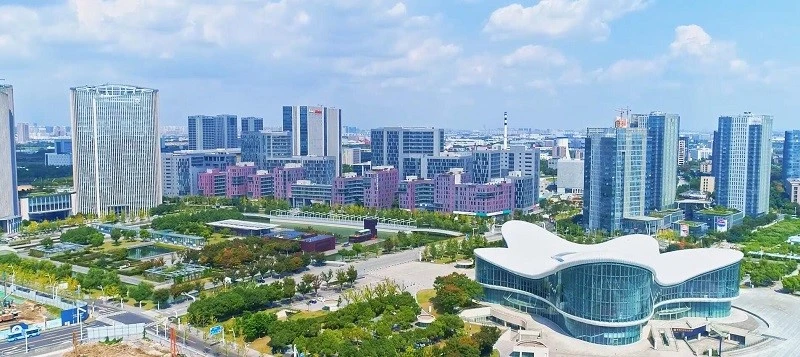
Changzhou Hi-Tech Zone focuses on automotive and precision sensors, attracting global leaders like Sensata and AAC Technologies. Its emphasis on cross-border collaboration and a business-friendly environment has made it a key player in high-performance sensor manufacturing.

2.Beijing-Tianjin-Hebei: Research and Development Hub
Beijing Huairou Science City serves as a hub for advanced sensor technologies, supported by national laboratories and a CNY 10 billion (USD 1.4 billion) industry fund. With companies like GigaDevice and GalaxyCore, it integrates R&D with mid-stream testing, aiming for CNY 1 trillion (USD 140 billion) output by 2030.

3.Central China: Expanding Scale and Diversification
Zhengzhou Hi-Tech Industrial Development Zone leads central China's sensor industry, hosting more than 4,000 enterprises with an annual output of CNY 20 billion (USD 2.8 billion). Key players include Hanwei Technology, which dominates China's gas sensor market, and Xintian Technology, a leader in smart water metering. The zone's industrial alliances and commercialization programs drive rapid growth.

Wuhan East Lake Hi-Tech Development Zone ("Optics Valley") is China's largest optoelectronic sensor base, featuring an 8-inch MEMS production line and major firms like Guide Infrared and Huagong Tech. Backed by Huazhong University of Science and Technology, it aims to become a "World Optics Valley" by 2035.

4.Western and Southern China: Emerging Innovation Centers
Chongqing Beibei Sensor Industrial Park, developed in collaboration with China Railway Construction, has attracted 34 enterprises, including Chuanyi Automation. With strong policy support, it targets CNY 150 billion (USD 21 billion) in industrial output by 2025.

Hangzhou International Sensing Valley emphasizes global integration, partnering with Germany's AMA Association to establish a technology service center. Companies like Hikvision and Crystal Optoelectronics drive its cross-border innovation model.

Shanghai Jiading Industrial Park, part of Shanghai's semiconductor strategy, gathers over 200 IoT and sensor firms, including United Imaging Microelectronics and Hesai Technology. With seven public service platforms and IC industry funds, it aims for CNY 100 billion (USD 14 billion) in output by 2025, focusing on smart hardware and automotive electronics.

Future Outlook
China's sensor industrial parks highlight a dual focus on technological self-sufficiency and industrial clustering, with the Yangtze River Delta accounting for over 50% of the nation's sensor enterprises. As government policies and investment continue to fuel growth, these hubs are poised to elevate China's role in global sensor innovation and advanced manufacturing.


