


Hey there! As a supplier of piezoelectric transducers, I often get asked about the linearity of these nifty devices. So, let's dive right in and break down what linearity means in the context of piezoelectric transducers.
First off, what's a piezoelectric transducer? Well, it's a device that can convert mechanical energy into electrical energy and vice versa. When you apply pressure or force to a piezoelectric material, it generates an electric charge. And if you apply an electric field to it, the material will change its shape. This property makes piezoelectric transducers super useful in a whole bunch of applications, from measuring pressure and acceleration to ultrasonic cleaning and medical imaging.
Now, let's talk about linearity. In simple terms, linearity refers to how well the output of a piezoelectric transducer is proportional to its input. Imagine you're pushing on a transducer with a certain amount of force. If the transducer is perfectly linear, the electrical output it produces will increase in a straight - line relationship with the force you're applying. For example, if you double the force, the electrical output will also double.
But in the real world, achieving perfect linearity is a bit of a challenge. There are several factors that can affect the linearity of a piezoelectric transducer.
One major factor is the material itself. Different piezoelectric materials have different properties, and some are more linear than others. For instance, quartz is known for its relatively high linearity over a wide range of forces and frequencies. On the other hand, some ceramic piezoelectric materials might show more non - linear behavior, especially at high stress levels or extreme temperatures.
The design of the transducer also plays a crucial role. The way the piezoelectric element is packaged, the electrodes used, and the mechanical structure around it can all influence linearity. A poorly designed transducer might have internal stresses or coupling effects that cause the output to deviate from a linear relationship.
Temperature is another important factor. Piezoelectric materials can change their properties with temperature. As the temperature rises or falls, the sensitivity and linearity of the transducer can be affected. For example, at high temperatures, the piezoelectric coefficient of a material might change, which can lead to non - linear output.
So, why does linearity matter? Well, in many applications, accuracy is key. If you're using a piezoelectric transducer to measure pressure in a high - precision industrial process or to detect small vibrations in a scientific experiment, you need the output to be as linear as possible. A non - linear transducer can introduce errors in your measurements, which can lead to incorrect data analysis and potentially costly mistakes.
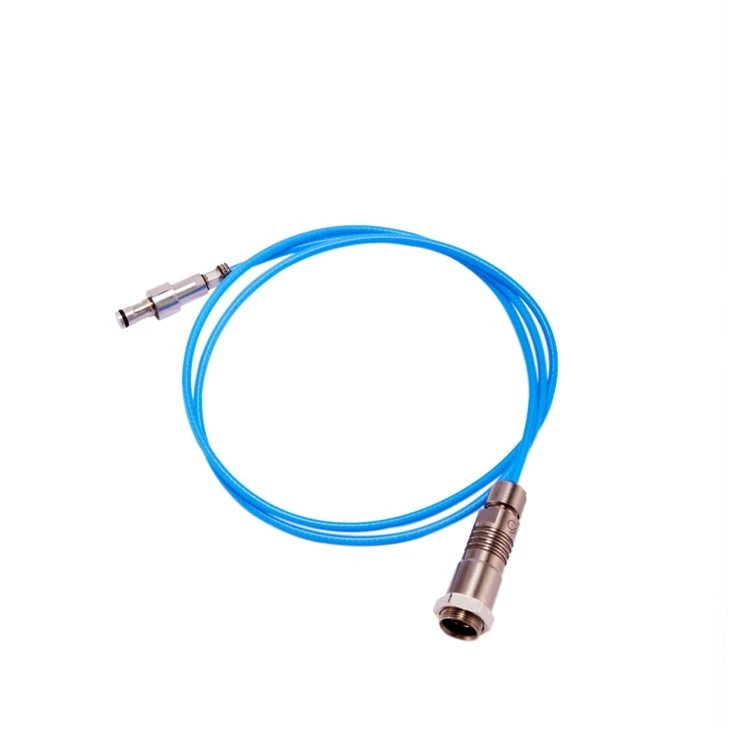
Let's take a look at some of our products and how linearity comes into play. We offer a range of piezoelectric pressure transducers, including the 4mm Piezoelectric Pressure Transducer and the 6mm Piezoelectric Pressure Transducer.
The 4mm Piezoelectric Pressure Transducer is designed for applications where space is limited. Despite its small size, we've worked hard to ensure good linearity over its specified operating range. This makes it suitable for use in miniature sensors and devices where accurate pressure measurement is required.
The 6mm Piezoelectric Pressure Transducer, on the other hand, offers a bit more room for design optimization. We've been able to fine - tune its internal structure to achieve even better linearity, especially at higher pressure ranges. This makes it a great choice for industrial applications where large pressure variations need to be measured accurately.
When you're choosing a piezoelectric transducer, it's important to consider the linearity requirements of your specific application. If you need high - accuracy measurements over a wide range of inputs, you might want to look for a transducer with a high degree of linearity. You can usually find information about the linearity of a transducer in its datasheet, which will give you details about the maximum deviation from linearity over a specified range.
We understand that every customer's needs are different. That's why we offer a variety of piezoelectric transducers with different linearity characteristics. Whether you're looking for a highly linear transducer for a precision application or a more cost - effective option with acceptable linearity for a less demanding task, we've got you covered.
If you're still not sure which transducer is right for you, our team of experts is here to help. We can work with you to understand your application requirements and recommend the best transducer for your needs. We also offer custom design services, so if you have a unique application that requires a special transducer, we can design and manufacture one just for you.
In conclusion, linearity is an important aspect of piezoelectric transducers. It affects the accuracy of measurements and the performance of the transducer in various applications. By understanding the factors that influence linearity and choosing the right transducer for your needs, you can ensure that you get the most accurate and reliable results.

If you're interested in purchasing piezoelectric transducers or have any questions about linearity or our products, don't hesitate to get in touch. We're always happy to have a chat and help you find the perfect solution for your application.
References
- "Piezoelectric Sensors" by G. S. Tomar
- "Handbook of Piezoelectricity" edited by J. F. Nye


